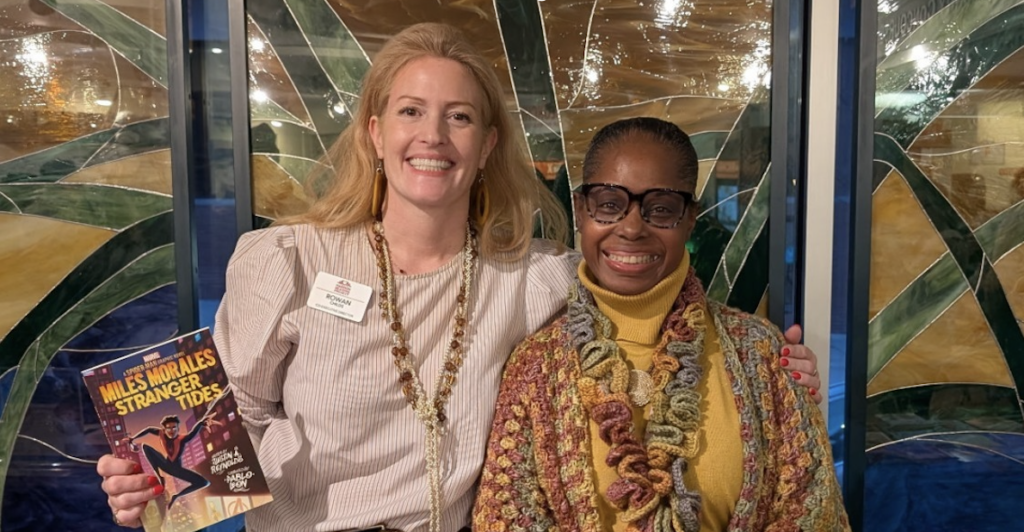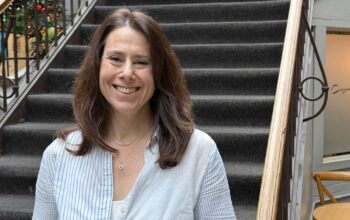
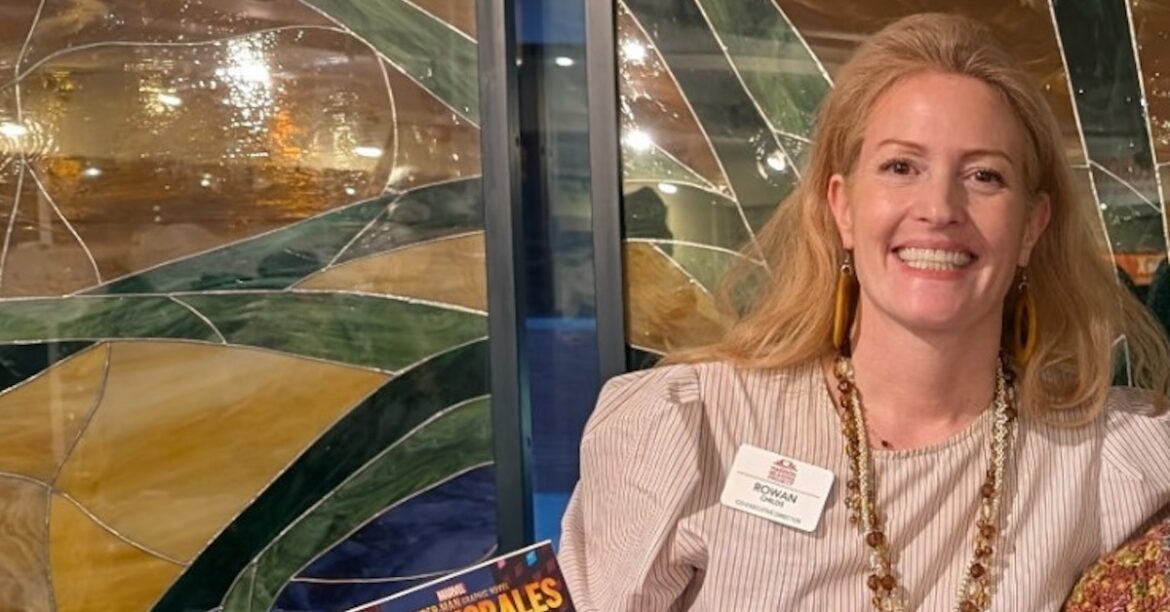
Rowan Childs is the founder and executive director of Madison Reading Project, a nonprofit that promotes child literacy by providing diverse books and resources to families and educators. Inspired by watching her own son reengage with reading, the idea for a program to help other children identify as readers was at the forefront of Childs’ mind. After noticing the large racial discrepancy in literacy rates, she launched the project as a pilot program in 2013. Since then, Madison Reading Project has grown to serve more than a dozen school districts, focusing on marginalized communities in the greater Dane County area. Through its outreach and community programs, the organization seeks to spark “book joy” by providing children with stories they truly want to read and forming their identities as readers.
What do you think is the biggest challenge our community faces?
Discrepancies in literacy. I would also say discrepancies in funding. Parents don’t have a lot of extra funds at home, and school districts don’t have a lot of extra funds either. There’s a lot of different things going on in the world. Kids are coming to school, and the schools want to make sure that everybody is being looked after and cared for in addition to doing all the schoolwork. Madison Reading Project works out in the community, so we always go to where kids are and families and communities are. We work with over nearly 300 different partners throughout the year. We see just a lot of different things going out in the community because we see so many people.
If you’re trying to work with marginalized communities, but currently they might not want to come out, you need to think about other ways to get them materials. You need to always be creative and innovative about how to reach people in different ways. We’ve always had that as a forefront of our values. We also know that one size doesn’t fit everybody. Even if it’s a school program, we know that every school isn’t the same.
What do you wish people in our community understood better?
We’d like more people to know about the impact of what we’re working on and doing. Sometimes people will say, “Oh you just give books.” We’re not just a book bank—we’re not just giving a kid a book and walking away. There’s so much that goes into all of the programming and sourcing and relationship building. All of that involves trust and communication and work to build all of the things that go into that.
It’s hard not to even judge ourselves on like, “Oh, you went to a resource fair and you talked to 20 people and gave out a hundred books.” There’s so many more things in there. We also gave out some really great information and we met 20 educators and let them know about these other programs, and we gave out bilingual information about our free mailed book program for babies.
The other plug I would give is the work we do with Dolly Parton’s Imagination Library. We run the program for Dane County, so we do all of the outreach and management for that system. With the Dollywood Foundation, we send around 14,000 books per month out to Dane County kids, which is a lot of work. We’re also looking at the messaging of that, on making sure people know who we are, because everybody knows who Dolly Parton is. She’s got a bigger name than we do, but we’re trying to also get our name out there as well.
What is one change you would make if you could that would make life better for people in our community?
The one thing we always talk about is joy. We’ve worked a lot on our values. We spent some time really refining them and defining them, like “book joy.”
Obviously joy for children is really important. But I think joy, even for adults, is probably just as important. And, it’s important for more of us to have some joy.
What in our community gives you hope?
Well, obviously, kids. We get to meet so many awesome kids and teenagers that are so fun and curious. That definitely gives myself and our staff a lot of hope and happiness. We do meet some amazing educators and teachers who are just doing amazing things. Kids just adore every word that teachers are saying, and you’re just like, “Oh, my gosh, that educator should run the world!”
We do get to see some of those things that people who are working a 9 to 5 “regular” job don’t always get to see, because we are interacting with lots of kids and lots of different people all the time. It does give us some hope when we get to hear about kids getting so excited about learning. Those are going to be our next leaders in our area.
This interview has been edited for brevity and clarity.