For over 50 years, a lakeside spot on the north shore of Lake Mendota offered a fun-filled summer camp for boys that attracted children and teenagers from across Wisconsin. Today, one of its cabins is being transformed into a nature center, warming house and museum to present the camp’s rich history.
In 1921, in honor of his late mother and brother, Michael Olbrich, a wealthy attorney who served on the Board of Regents for UW–Madison, donated 22 acres of land along the north shore of Lake Mendota to camps serving local youth. The land, originally inhabited by Ho-Chunk people, was divided into three separate sectors.
“There were three kids summer camps: a YMCA camp called Camp Maria Olbrich, a YMCA camp called Camp Wakanda and a private boys camp called Indianola, which opened in 1907,” said Don Sanford, longtime Madison resident, local historian, and author of “On Fourth Lake: A Social History of Lake Mendota.” “When it closed in 1967, it was the oldest resident boys camp in the state of Wisconsin,”
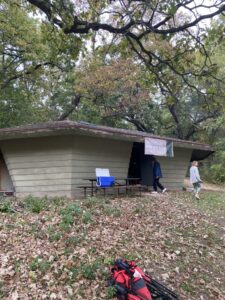
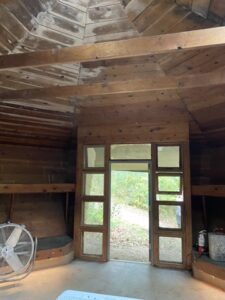
Situated on the southern edge of what is now Governor Nelson State Park, the unassuming Hogan House has sat vacant in a forested area for over 70 years. The building, originally built for the camp in 1950 and inspired by traditional Native American “hogan” dwellings, was used as a bunkhouse for Camp Wakanda until its closure in 1972. Sanford says it’s “dumb luck” that the Hogan House has stood the test of time while most of the other camp buildings were demolished.
“When Camp Wakanda closed in 1972, there were a number of buildings there on the site. When the state purchased the property, they sold all those buildings,” said Sanford. “With the exception of the Hogan House and a little building right next door to it, the landscape was scrubbed because the park was going to be a lot of open space.”
Luckily, it appears the historic cabin is here to stay. Over the next few years, thanks to the efforts of the Friends of Governor Nelson State Park, the building will be undergoing nearly $100,000 in renovations, which include upgrading wiring and adding new doors, windows and furniture, as well as a deck and patio. Ed Linville, the managing architect of the renovation, says that the building’s solid architecture and large overhangs, which helped protect its wood siding from the elements, has helped it endure over time, making it a prime candidate for renovation.
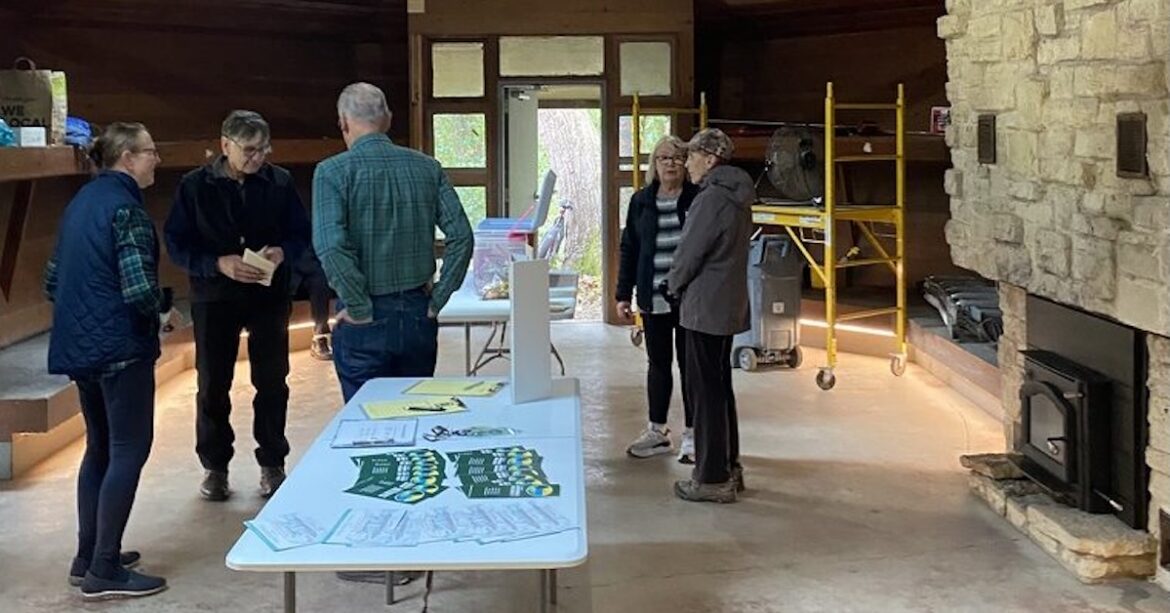
Currently, the building is in phase one of the renovation, a process that involves repairing the fireplace, replacing and treating the interior wood and exterior fascia, among other fixes, to make it functional again. Overseeing the renovation is Drew Howick, president of the board of the Friends of Governor Nelson State Park. Howick said this phase is nearing completion, with phase two beginning in late spring or early summer of 2026. This next phase will involve more visual changes to the exterior building.
“We’re going to replace the doors with some glass doors and new surrounds, and we’re likely going to remove a door and replace that with a window facing the lake,” Howick said. “The third and final phase of the project will prepare the cabin to be multifunctional, suitable for visiting schools, meetings and people wanting to host events in the space, which will also serve as a winter warming house.”
The cabin sits off the park’s cross-country skiing trail. Sanford envisions the house having comfortable furniture, along with memorabilia of its bunkhouse past lining the walls.
He hopes the house will provide “a chance for people to connect with the past in a very personal way. When you can provide a little framework for a park visitor, it helps them connect with the land better, and just see how things have changed,” Sanford said.
While Linville, the project architect, hopes to bring more light into the building and create a more welcoming, comfortable atmosphere by installing skylights and lighter wood paneling, he’s also intent on paying homage to the original architect.
“I couldn’t have designed a better building, frankly,” Linville said. “This guy knew what he was doing, and I’m just here to help give it a new life.”
So far, the building’s renovation is being funded by a $20,000 Knowles-Nelson stewardship grant and $20,000 in private donations. Over $15,000 has been raised in additional funding from private donations to cover the costs of phase two, and the Friends hope to raise $5,000 more to reach a total of $20,000 in private donations, said Howick. Additionally, the group recently submitted an application for a matching grant from Knowles-Nelson that its members hope will bring the total funding available for phase two to $40,000.
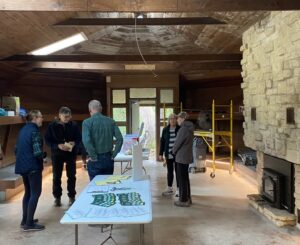
In October, Friends of Governor Nelson hosted an open house where visitors got a sneak peek into the progress made on the cabin, as well as the changes to come. The open house attracted families, historians, conservationists and even some former Wakanda campers who had stayed in the Hogan House itself and have been helping fund the revitalization. One camper walked into the cabin, pointed out a bunk in the corner and said, “I slept right there 50 years ago.”
Besides former campers, others who grew up in the area and have an affinity for the campsite, including Howick, have been supporting the project.
To be sure, the land Hogan House sits on has its own rich history. When members of the Ho-Chunk nation inhabited the site, which is located near a shoal in Lake Mendota, they protected it carefully, archaeological records suggest.
“The theory is that people more than 2,000 years ago lived here and realized that shoal is an important connection,” Sanford said. To keep rival tribes from crossing the lake on the shoal and encroaching on the rich resources in the area near what is now Governor Nelson State Park, “they built a fortified village site here with poles and logs stuck in the ground,” he added. “There was a lot of life that happened here.”
In the coming months, the house will undergo a major transformation to reflect its rich history on land cherished both by its original Ho-Chunk inhabitants and generations of campers.