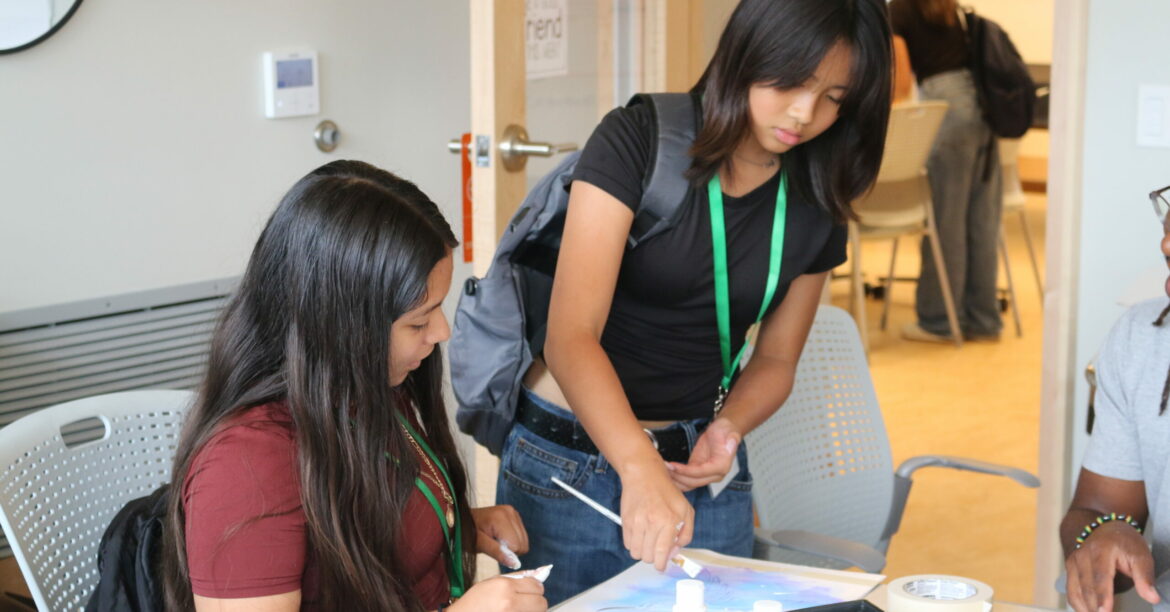
A mental-health initiative that began with a 2020 Dane County grant has grown into one of Madison’s most comprehensive community-based support systems for young people. The Youth Advocacy and Support Program (YAAS), housed in the Bayview Community Center, has become a salvation for families who lack access to traditional therapy, legal resources or consistent mentors.
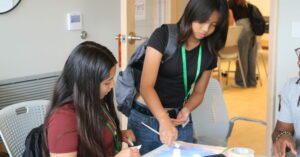
Bayview is a nonprofit organization, located on the near south side of Madison, that provides housing and services to low-income residents. In the heart of Bayview—a neighborhood of colorful one-to three-bedroom apartment units and townhouses—is the community center, YAAS’s home base.
When the program launched five years ago, it began with a straightforward goal: Bring in a social worker and make mental-health support accessible to low-income youth who had little exposure to — or comfort with — traditional clinical settings.
“We quickly realized there were so many different needs within the community, differing from kid to kid,” said Sam Nesovanovic, the Teen Program Coordinator of YAAS, who has been with the program since its inception.
This realization shaped the pathway of the program, which aims to create connection, community and acceptance, giving youth residents the resources they need to increase their emotional and social wellbeing and resilience in the face of various challenges.
YAAS blends group programming, individualized support, school-based support and restorative justice practices that, rather than relying on punishment, take a community-centered approach to addressing harm with focuses on accountability, healing and repairing relationships. The program’s ultimate goal is to create a place for youth to discuss and navigate sensitive topics in a supportive environment.
YAAS staff members are not therapists, but they’re carefully trained and supervised so they can guide the youth through problems that might otherwise go unaddressed. They have backgrounds in psychology, social work and child welfare that equip them with the skills and knowledge to provide children with safe and informed mental-health and mentorship support and serve Bayview’s youth population by addressing justice gaps.
In broad terms, this is what Sara Davis, a clinical professor at UW Law School who studies health and civil-justice systems, sees as the promise of programs like YAAS. Davis says that efforts to recognize that the country’s justice gap won’t be fixed by adding more legal help alone. Instead, she argues, expanding the amount of trained helpers—like those working at YAAS— means far more people can get the support they need to improve their emotional wellbeing or address hurdles before they become bigger obstacles. As she put it, the goal is to make sure “more people can get the services they need and therefore solve problems.”
In addition to their knowledgeable backgrounds, YAAS staff undergo onboarding, background checks and continuous training. They attend sucide-prevention courses, meditation training and racial justice summits. Weekly supervision ensures staff stay grounded in the needs of the youth and can ask each other, “What’s Working? Who needs more support? Has anything concerning come up?” Nesovanovic said.
In September, to better support the differing needs of the youth involved in YAAS, the program was split into two parts: The Youth Program, for elementary school kids, and the Teen Program, for youth entering sixth grade and up. Both programs operate by the same structured support model but provide tailored and tiered counseling to meet the needs of children of different stages of development who are facing different issues.
The first tier is group programming centered around community building and emotional grounding. This tier provides “support, affirmation, social and emotional benefits,” Nesovanovic said, often through mindfulness practices that teach skills kids can use to calm themselves and outdoor field trips that provide additional calm by giving kids a break from home or school stress.
The second tier consists of gender-based affinity groups, where kids can talk openly about identity and the pressures they face day-to-day. These groups allow participants to be more vulnerable and open up about sensitive gender-related topics. In addition, YAAS hopes to add race-based affinity groups.
The third tier provides individualized mentorship and support. For Teens, YAAS runs drop-in hours where students can receive guidance and get mental-health support from the trained YAAS staff. Elementary students receive similar support through scheduled 20-minute check-ins. Weekly staff meetings help ensure that no child’s needs fall through the cracks and that staff identify kids who may be having a more challenging time, or facing discrimination that may be impacting their life outside of the program.
Another new priority for YAAS is expanding its connections to Bayview youth, most of whom are people of color attending predominantly white schools, outside of the community center. Since the fall of 2022, YAAS has hosted weekly lunch clubs at West High School and Hamilton Middle to give student group members a place where they can decompress and get support during school hours, a time when youth are more likely to have conflicts and experience a variety of emotions, according to Nesovanovic.
“These are spaces where they can feel like themselves,” Nesovanovic said, and have the chance to talk with individuals they already trust about problems and negative emotions before they become bigger. YAAS’s ability to offer these opportunities in schools “ is one of the things I am most proud of,” they added.
In addition to offering school programming, YAAS also works with YWCA Madison through the association’s Community-Based Restorative Justice Program.
This program has two components: It offers after-school programming at community centers and a restorative justice process for municipal citations, both of which youth members can access at community centers across Madison, including Bayview, Goodman Community Center and Kennedy Heights Community Center. At Bayview, the after-school programming is run by Kiana Burnette, the YWCA’s community restorative justice program coordinator, who meets weekly with middle-school aged youth to introduce them to the importance of nonviolent communication tactics and the promotion of social justice.
The municipal citation restorative justice process is run in coordination with YWCA’s Community Restorative justice intake coordinator who receives referrals from police departments in Madison and surrounding areas regarding cases in which children ages 12 to 16 have received nontraffic municipal nontraffic citations. After completing two appointment-based circle sessions, the youth can have their citations removed from their record. The circles, led by trained youth circle keepers and the intake coordinator, center around repairing harm. Youth members of the Bayview program who are trained to be circle facilitators welcome participants and ask rounds of vulnerable questions.
Nesovanic said that the youth involved in the restorative justice program “hop into those circles and help facilitate with staff and get compensation,” gaining real-world skill in mediation and leadership. Through this, not only do YAAS youth get hands-on experiences, but they also become knowledgeable in how to handle stressful situations and learn important life and social skills, they added.
Bayview and the other community centers partnering with the YWCA also offer professional development, restorative parenting workshops, circle practices in the community and training that teaches youth how to become circle keepers.
“Kids love to be involved in their work, in their healing and in their lives,” said Ryan Poe-Galvinski, a clinical assistant professor at UW Law School and an expert on child welfare and the effects of trauma, who added that restorative justice programs like the YWCA’s can be a great alternative when kids get into trouble, because facing the court system “can be terrifying.”
Though YAAS does not offer therapy, the program does help connect families to mental-health providers. The staff also helps to coordinate appointments and provide transportation support. The program and staff also approach the process of making referrals with patience and sensitivity, knowing that many Bayview families have had negative past experiences, or only limited experiences, with the health system. Trust grows slowly, Nesovanovic said, but “walls are gradually coming down.”
YAAS continues to face challenges as it works to reduce the stigma surrounding mental illness, but the program]s model has proven to be transformative. At its heart, YAAS is building a community where young people can show up for themselves, be heard, and get support as needed.“We want people to come as they are, bring their gifts, talents and experiences, and share that with each other,” said Nesovanovic.
After five years, YAAS is still expanding, one lunch club restorative circle and mentoring conversation at a time.
This story is part of our Collaborative Storytelling projects in which we volunteered at The Bayview Foundation to learn about youth mental health on the ground level with a solutions perspective. For this story, Bayview was allowed to see this story before we published it as part of our partnership. However, all of our collaborative stories still undergo an independent fact-checking and editorial process.
This story was updated on February 16, 2026: An earlier version of this article identified Jules Banayag as the restorative justice program coordinator; the coordinator is now Kiana Burnette.