According to data collected by the Tenant Resource Center, a Madison organization that supplies eviction information, support and legal representation to households and individuals, 2,353 unique renter households faced eviction in Dane County last year. For all filings, landlords were represented by attorneys 55% of the time, while tenants were represented 29% of the time. Almost 75% of the Tenant Resource Center’s clients in 2024 spent more than half of their monthly income on rent, and people of color, female tenants and individuals with disabilities were disproportionately impacted by eviction.
Insufficient representation of tenants in eviction hearings can reinforce uneven power dynamics between landlords and renters, and staff at the Tenant Resource Center understand that not everyone in Dane County is equally impacted by eviction.
“Just having an eviction filed against you becomes a barrier in itself and makes it harder to get into housing,” said Jeff LeMessurier, the agency’s housing services program manager. “Most of the time when people are facing eviction, especially in court, it’s because there are other things going on as well—loss of income, loss of a family member, medical issues,” among other life challenges. And once “there's a court record of an eviction notice filed against someone, especially if it goes to judgment,” he added, there can be a compounding negative effect that “just becomes a cascading thing.”
To provide tenants with equal legal representation and improve housing stability in Dane County, the Tenant Resource Center helped launch the Eviction Diversion and Defense Partnership (EDDP) in 2021. Staff at the center and the EDDP hope that by helping tenants understand their civil rights, answering questions outside of the courtroom and connecting people with attorneys they will be able to provide more equitable resources to people facing housing instability.
”We reach out to every single person who receives an eviction filing and make sure they know they have a court date coming up,” said Amy Lindley, the Tenant Resource Center’s development and communications manager. If someone misses their court hearing, they could get a default judgment of eviction, “but we believe everyone deserves a chance to at least tell their story and have the best chance possible at keeping their homes,” she said.
The Tenant Resource Center also works alongside tenants through every step of the rental process. Whether a family or individual needs assistance while looking at properties, has problems with their units or is learning to communicate more effectively with a landlord, representatives from the center walk them through their options.
“ We will give you the tools to make the decisions that work for you, so you're empowered to make the decisions that you need to make,” said Lindley.
In 2024, more than 83% of households facing evictions that received EDDP legal representation and navigation services had their cases dismissed. Since January 2025, the Tenant Resource Center has worked with EDDP legal partners to provide representation for 295 renter households.
Beyond the immediate risk of homelessness or difficulty securing future housing, eviction can cause less visible consequences. For example, in one recent case, the Tenant Resource Center helped a tenant stay in their home, rather than move back in with a former partner from an unhealthy relationship, and in another, parents were able to secure stable housing for their kids before the school year began, Lindley said.
Much of the funding and community awareness that allows the Tenant Resource Center to continue to make a difference comes from the Community Shares of Wisconsin. In their biggest outreach event of the year, the Tenant Resource Center has participated in The Big Share, a single-day fundraising event hosted annually in early March by Community Shares.
Through the event, members of area nonprofits “all get to learn about each other and what we're doing, which really opens a lot of doors for future partnerships with other member organizations. It also helps the community know there are so many more resources than people are aware of,” Lindley said.
Supporting more than 70 nonprofit organizations, Community Shares and its member groups raised over $810,000 through The Big Share 2025. This kind of fundraising, along with grant support, enables the Tenant Resource Center to keep four locations open — one on Winnebago Street, one in Sun Prairie, one on the Madison College Goodman South Campus, and one on UW–Madison’s campus—to assist as many residents as possible.
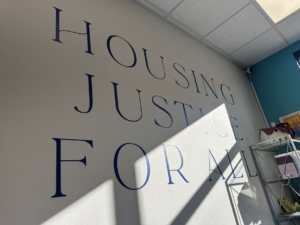
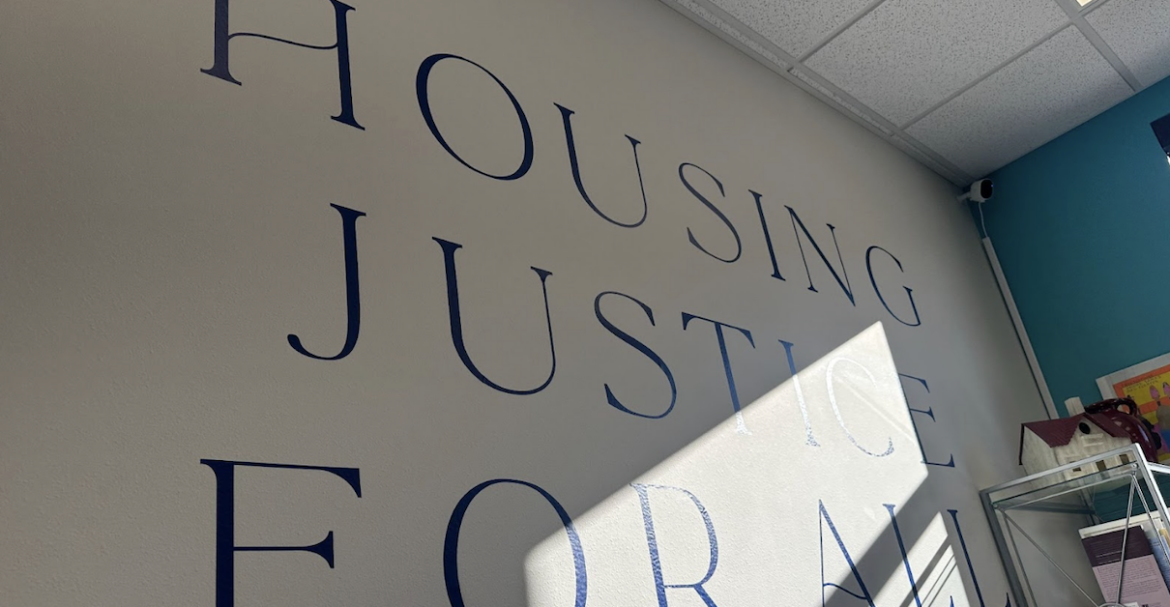
To reduce language and technology access barriers, the Tenant Resource Center also offers all its services in both English and Spanish and has created a room at the office on Winnebago Street where tenants can attend their hearings via Zoom as needed.
“ A lot of people don't have access to technology or have low technological literacy. It’s important that people feel comfortable attending their Zoom hearings and know that they have a place to do so,” said Lindley.
In addition to organizational partnerships, the Tenant Resource Center relies heavily on community volunteers for housing counseling and mediation of eviction disputes. In 2024, volunteers helped staff answer 15,200 emails and phone calls and serve 6,058 in-person visitors.
“I really think the staff, the volunteers and the board members from top to bottom care about the mission, care about the community, but also care about each other,” said LeMessurier. “I think that goes a long way when you’re doing this very difficult work.”