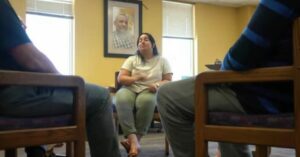
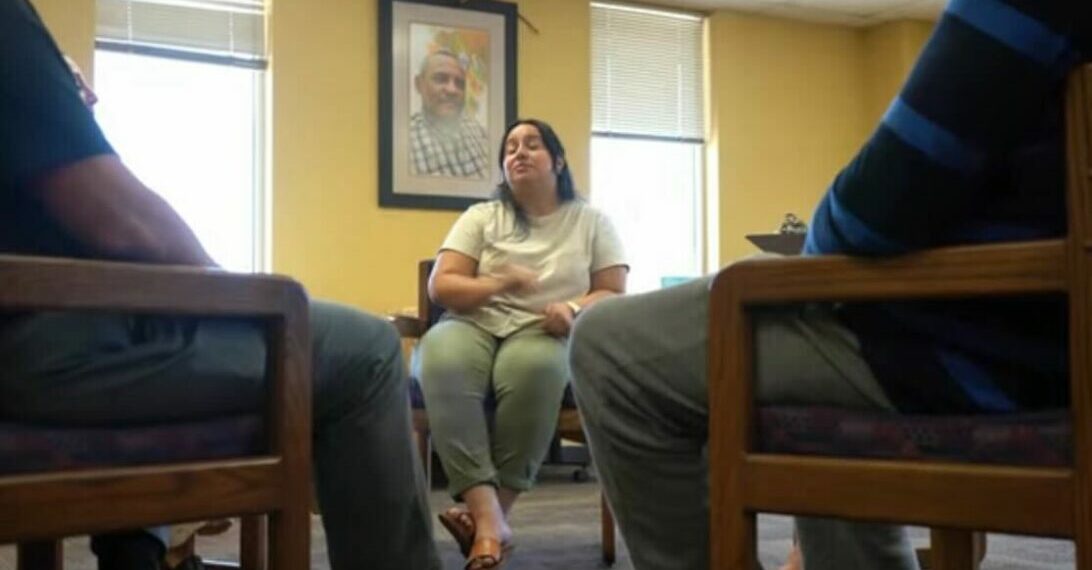
On evenings throughout the month in Dane County, individuals gather in a circle. Some have never met before, others sit quietly, carrying regret, uncertainty or frustration. A facilitator guides the conversation, asking participants to speak openly about what happened and how to repair the damage.
Drawing on long-standing Indigenous and ancient practices from around the world, restorative justice is an alternative to the traditional retributive criminal justice system. The approach is built on a simple but powerful idea: arrest and incarceration alone cannot solve deeper social issues underlying crime. Restorative justice, by contrast, brings victims and those responsible for offenses together in a structured process where offenders can acknowledge the impact and repercussions of their actions and work toward making amends. This approach helps both victims and respondents achieve healing and move forward in a more positive way.
By focusing on accountability and repair, restorative justice practices also aim to keep individuals, especially youth, out of the traditional justice system and reduce recidivism. Across the country, restorative justice programs are transforming the way people interact with the legal system. According to a 2022 report by the National Council on State Legislatures, more than half of all states have passed laws supporting restorative justice practices. Since its implementation in 2015, Dane County’s restorative justice program has evolved to become a common alternative to traditional court processes for misdemeanor crimes committed by individuals aged 12 to 25.
Instead of facing a judge’s bench or courtroom gallery, defendants participating in the process now often have the opportunity to work through harm together with their victims, with the approach aiming to benefit not only both parties directly involved but the community as a whole by reducing the risk of re-offense.
“More agencies are getting on board with these types of programs and realizing there are a lot of things we can’t just arrest our way out of,” said Livia Novitzke, lieutenant of the Madison Police Department’s Community Outreach unit, adding that addressing underlying causes of behavior such as trauma or mental health fosters relationship-building, strengthens community trust, and reduces the likelihood of reoffending.
How cases reach restorative justice
The process for youth offenders to access restorative justice begins with referrals and voluntary participation. A referral enables individuals to take responsibility for the harm they caused and engage in a process focused on repair. All Madison Police Department referrals are handled by Kathryn “Casey” Wahl, who works out of the Midtown District.
Wahl reviews each referral, which for youth are categorized by age, and makes sure it meets three specific criteria before it can be sent out to one of the agencies the department contracts with to facilitate restorative justice programs— referred individuals cannot have an open criminal case, a recent violent crime conviction (generally within the last three years) and they cannot resist arrest.
If a case meets these requirements, Wahl refers it out to one of the local contracted organizations to administer the restorative justice practice.
Two programs, two age groups
The City of Madison, in collaboration with the Madison Police Department, offers restorative justice opportunities to individuals between the ages of 12 and 25.
Restorative justice referrals for youth began in 2015, with the YWCA receiving referrals of youth between the ages of 12 and 16. The YWCA handles every municipal violation except traffic cases, which are processed through the traditional court system. The youth and their guardian must choose whether to opt into the program or go through a traditional court process, where they will face the penalty deemed necessary by the court, such as a fine. Most cases involve misdemeanors and some low-level felonies.
For individuals 17 to 25, referrals are handled by the Dane County Community Restorative Court.
Since July 2015, the CRC has been contracted to manage cases involving disorderly conduct, simple battery, obstructing an officer, property damage or theft, including shoplifting, according to the Madison Police Department website. The CRC also receives referrals from law enforcement in surrounding communities, including Sun Prairie and Middleton.
In 2025, Wahl reviewed over 400 adults’ cases and referred about half of these out to the CRC, while youth referrals to the YWCA totaled between 100 and 200 throughout the year, she said.
The importance of these referrals is crucial, said Stephaine Marino, supervisor of the CRC: “When someone commits a crime, there’s a ripple effect. It doesn’t just affect one person; it affects families, neighborhoods and communities.”
Young adults charged with low-level crimes can also be referred to the CRC if the cases’ prosecutors deem their participation in restorative justice circles appropriate.
These referrals come at the discretion of prosecutors to send any case they deem appropriate. If a victim is named in the case, the office contacts the victim beforehand to ensure they are aware of the program and agree to the referral being made to the respondent. If the victim does not agree with the referral being made to the program, the office will not send the referral.
For cases that originate from local law enforcement, a respondent may still complete the restorative justice program even if the victim chooses not to participate.
Determining whether a case is a good fit for the CRC
Once a referral is received by the CRC, Marino reviews the case to determine whether it is appropriate for the restorative justice circle process, and 99.9% of the time, she finds that the process is suitable for the defendants’ cases, she said.
Once cases are accepted, they are assigned to a staff member, typically a social worker or program leader, who does an intake assessment with the respondent to understand their background, needs and the circumstances of their offense.
If a case moves forward, a restorative justice circle is held with the respondent, the victim and trained community volunteers, or peacemakers, as they’re called. During these circles, participants discuss the harm caused and develop a repair harm agreement outlining what they believe the respondent must do to repair harm.
CRC is designed to be a short-term program, typically lasting three to six months. Once the respondent completes the repair agreement, the case is closed.
And if respondents come through it successfully, they’re more likely to understand the ramifications of their actions, take ownership and develop a better version of themselves, Wahl said.
“If I were to just write a check or show up and pay a fine, what did I learn? I learned I have to pay a fine. I didn’t learn anything about the ramifications of my actions. I didn’t have to talk to that person potentially about how they felt about what happened,” she said.
The view that restorative justice helps young offenders reckon more deeply with the harm they have caused and move forward with a deeper sense of responsibility is supported by research. According to the NCSL report, a 2015 study by the Office of Juvenile Justice and Delinquency Prevention and George Mason University found that juvenile restorative justice programs have moderately reduced future delinquent behavior, increased victim satisfaction and increased perceptions of fairness in the justice system.
Statewide reach through UW Law School
While the Madison Police Department works to serve the local community, UW Law School’s Restorative Justice Project has worked statewide since 1987 to provide restorative justice services primarily to adults through prison-based dialogue programs, while also working with juveniles and young adults through other initiatives.
Any survivor or crime victim who wants to meet with the person responsible for the harm can take part in the restorative justice process, as long as they are 18 or older and the offender is in Wisconsin, whether incarcerated, on parole, or on extended supervision, said Johnson Scharrer, director of the Restorative Justice Project. Participation in the project must also be initiated by the victim.
Because of the sensitive nature of these crimes, often involving homicides or sexual harm, “they’re very deeply personal,” Scharrer said, and the dialogues typically involve only the survivor, the responsible party, facilitators (UW law students) and optional support persons. The project focuses on who has been harmed, what they have experienced and what they need to repair the harm they have experienced.
Carrying restorative justice forward
Restorative Justice is changing how individuals interact with the legal system. It creates spaces for participants to understand the effects of their actions and for victims to receive healing from harm. While restorative justice is not meant to replace the traditional system, Wahl and Scharrer emphasize that it offers meaningful accountability and healing for everyone involved, leading to safer communities.
According to the CRC's website, restorative justice programs, when compared with the traditional criminal justice system, can resolve cases more quickly, increase satisfaction and perceptions of fairness for both victims and offenders, reduce rates of reoffending and deliver notable cost savings per case.
In the CRC’s 2024 annual report, an anonymous respondent who had participated in a restorative justice circle said, “The restorative justice circle provided me with the opportunity to reflect on my actions, confront the harm I caused and take meaningful steps toward making amends. It helped me gain clarity on the person I aspire to be and the values I hold dear.” Additionally, according to the same report, 95% of respondents successfully completed their Repair Harm Agreements in 2024.
“We are coming together saying, ‘we know that you made a poor choice,’ but we support you, ‘so you know this does not define who you are,’” Mariano said. “The traditional system doesn’t give people that voice.”