
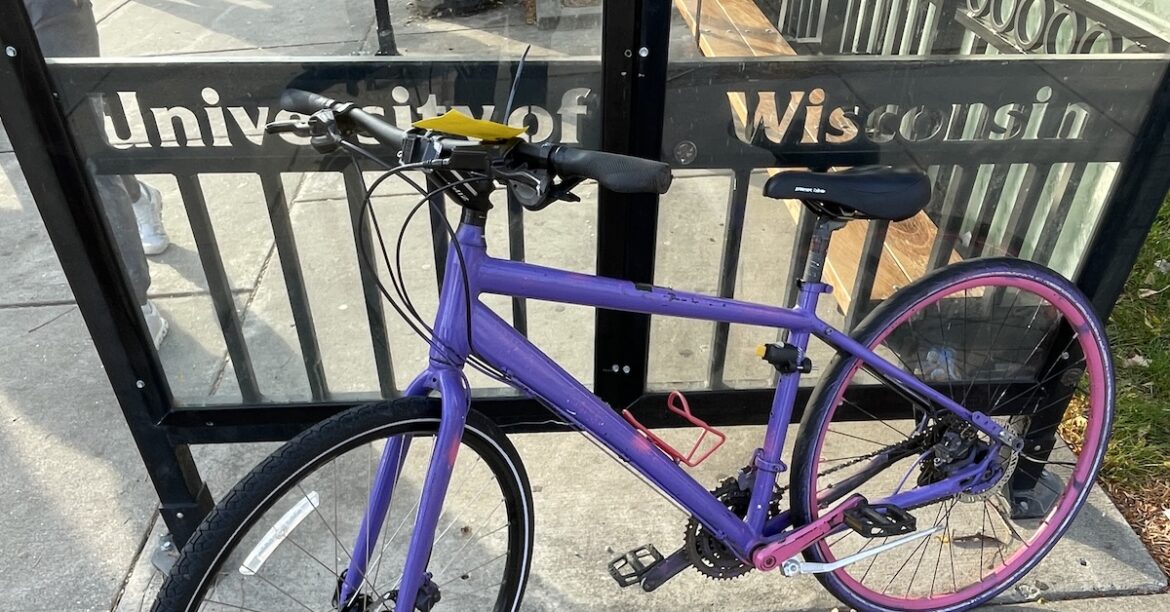
After facing a budget shortfall for the second year in a row, the City of Madison Metro Transit Division is expected to reduce service on some routes.
This summer, Madison Mayor Satya Rhodes-Conway cited inflation and fuel costs when she asked every city agency to plan for a 2% budget reduction.
The City of Madison Metro Transit Division is one of the Madison agencies balancing the directive to reduce budget costs by 2% while remaining accountable to commuters who depend on the bus.
Many Madisonians share the view that buses should be accessible to all and are concerned about potential cuts to service.
“I think the bus service is excellent on campus but slow in other parts of town,” said Savannah Carr, a librarian who uses the bus to commute to work. “If we’re going to live in an accessible city, we need to think about public transit for all parts of Madison.”
Metro Transit General Manager Jamie Acton said in a letter to the mayor in August that Metro Transit was $5.75 million over budget in 2025 and is projected to be $4.2 million over budget in 2026.
Acton said this year’s deficit was “driven by paratransit demand, post-warranty parts for 60-foot buses and higher overtime dependency.”
To bring operational costs down, Metro Transit recommends a reduction in some routes, which would mainly impact early morning and late-night trips. According to the Planning Staff Report dated Aug. 20, 2026, all alternatives were assessed based on the impact on riders.
The staff report proposes all morning pull-outs from the garage start after 4:45 a.m. on weekdays and after 5:45 a.m. on weekends. This would be a change from the current system. “There are support staff who are required to be on-site at the garage at least 45 minutes ahead of the pull-out times,” Metro Transit’s marketing manager, Andrew Liedl, wrote in an email.
Metro Transit’s intent is to affect a minimal number of commuters.
“Most routes already pulled-out after 4:45 AM on weekdays and 5:45 AM on weekends. Moving the pull-out to align with these routes both reduces driving time, and Madison Metro does not need staff on-site as early. The morning pull-out times will change for only seven of the 29 bus routes, and the first bus will be between 15 minutes and one hour later than it is today,” Liedl wrote.
In addition, the report states that none of the changes are a “Major Service Change,” and that none of the changes violate Metro’s Title VI policy, consistent with the Civil Rights Act of 1964 prohibiting discrimination based on race, color or national origin.
There are 13 average daily riders on the weekdays and 99 average daily riders on the weekends on the routes scheduled for service changes, according to Liedl.
“The affected routes are less than 0.5% of Metro’s average weekly ridership,” Liedl wrote.
“The costs of operating transit, including wages, bus parts and fuel, have gone up dramatically in the last few years, while state and federal funding sources have not kept up,” Liedl wrote. “This means that an increasing portion of the cost of operating transit has to be borne locally.”
Despite Metro Transit’s intent to minimize the effect on Metro’s weekly ridership, there will be changes. Longtime Madison resident Susan De Vos, a retired sociologist and president of the Madison Area Bus Advocates, said in response to the route cuts, “We are looking at it from our discussion as an ethical dilemma, and the city is looking at it as more of a utilitarian [approach] — the biggest bang for the buck.”
“I’d like to see Metro become a regional transit thing and to be run by Dane County,” De Vos said. “I’d like the county to take over from the city. And operate it throughout the whole county, including in rural areas.”
Shifting to a countywide transit system seems unlikely, at least for now, however. “The funding model is also a challenge for local transit systems. Unlike most states, Wisconsin state law does not allow for dedicated transit taxes. This means that Metro must be funded as a part of a city budget, where it must compete for funds with other essential services,” Liedl wrote.
For more information, visit Metro Transit December Service Updates, or call Metro Transit customer service at 608-266-4466. For questions about Metro Transit in general, go to the Metro Transit website.