How one afternoon event exposed the cost of nonprofit fragmentation, and started closing the gap
By Amari Mbongwo
In a county with more than 6,000 nonprofits, you'd think the hardest part would be finding enough resources. It isn't. The hardest part is knowing they exist.
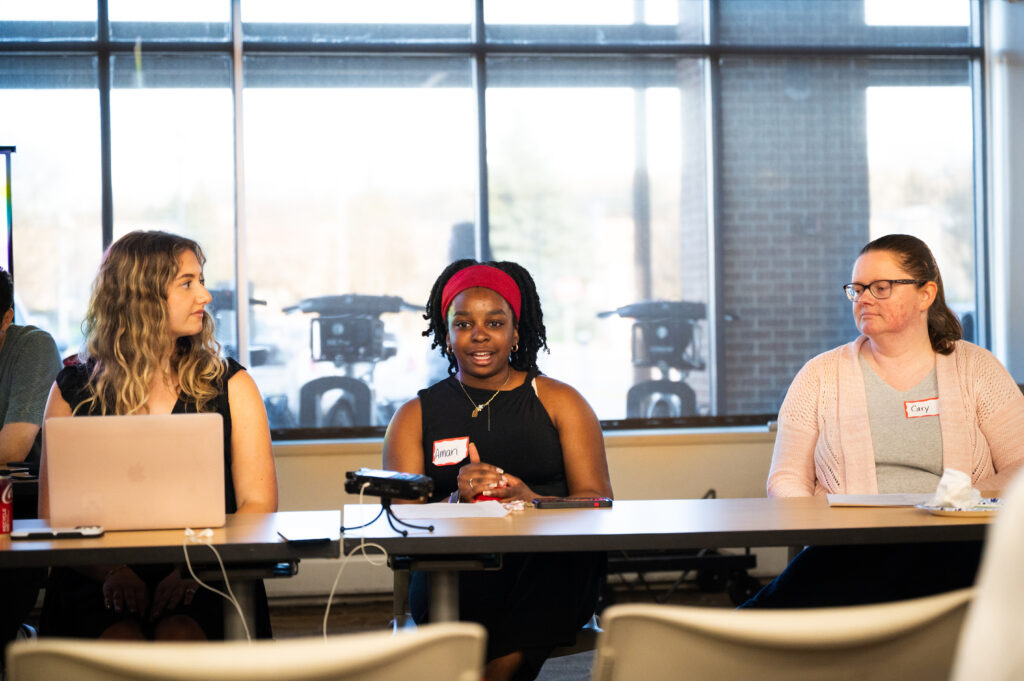
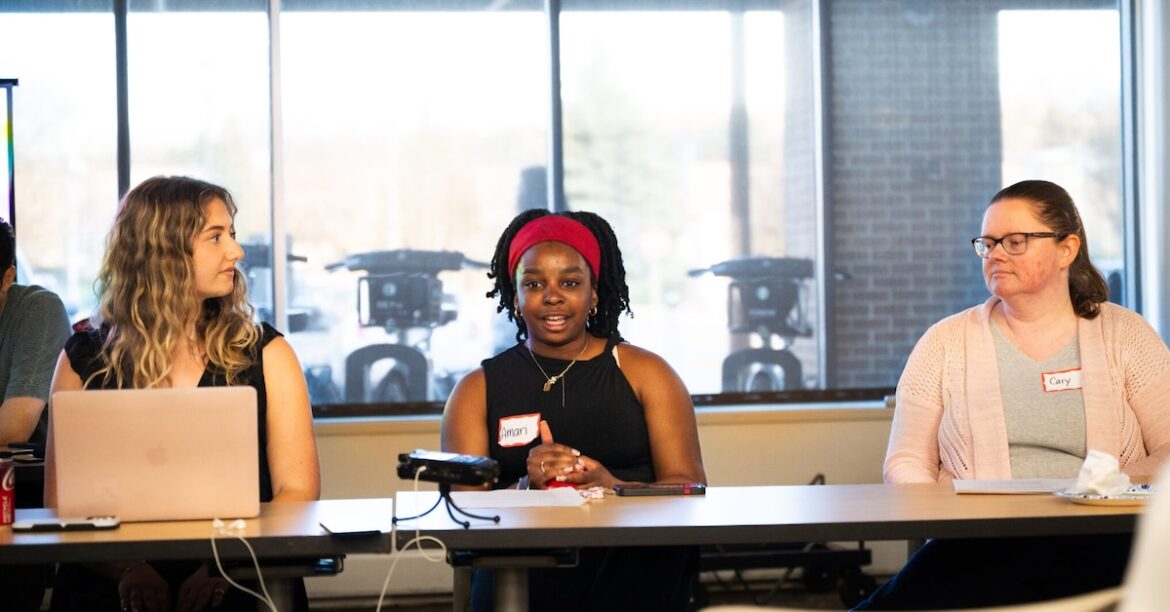
That was the quiet revelation of the Youth Mental Health Resource Fair on April 16, hosted by Madison Commons at the UW-Odyssey Project building. When a student organizer asked the room whether anyone had thought about building a shared database of Madison nonprofit services, the response was immediate. It already exists. In a room full of organizations working on the same problems, not everyone had heard of it.
That moment, small, almost offhand, said everything about the real barrier facing Dane County's nonprofit ecosystem. It isn't scarcity. It's fragmentation.
Dane County is home to 6,494 nonprofits, according to the Madison Community Foundation directory, ranging from food pantries to mental health providers. In the greater Madison metro area, that number swells to over 7,000, employing more than 52,000 people and holding $44 billion in assets, according to Cause IQ. With that many organizations operating in the same space, nonprofits can end up duplicating efforts, missing families who fall between the gaps, or simply not knowing what resources exist a few miles away.
“I don't think there's a lot of opportunities for nonprofits to meet and collaborate," said Kyianna Baker, a Play and Learn Group Leader and Parent Educator at Play & Learn, who attended the fair. "I think it'd be so great if we could all work together. It seems like we're sort of a lifeline for a lot of people in the Madison area.”
That fragmentation shows up in the daily work. Jonathan Delgado, a crisis stabilization case manager at Anesis Therapy, described spending hours on the phone trying to connect families to resources his own organization couldn't provide. When a family needs stable housing, transportation, or crisis mental health support, the process of finding it falls on whoever is closest to them.
“We're constantly trying to find ways to link people to immediate crisis support that we don't necessarily have,” said Delgado. “We're on the phone calling people, making connections. We have to be proactive in the approach."
The fair, organized in partnership with the UW Odyssey Project, Solutions Journalism Network, and the UW-Madison Morgridge Center for Public Service, brought together more than a dozen Dane County nonprofits on a single Thursday evening. Several set up tables to consult with parents and guardians, including Play and Learn, Briarpatch, Rise, UW Odyssey Project, Our Generation, GSafe, Root 2 Rise, Behavioral Health Resource Center of Dane County, Parent to Parent, Anesis, Dreams Lab/Sleephealth Ambassadors, Neighborhood House, and Common Threads Family Resource Center.
While the nonprofits were there to serve families, the fair quietly created something else: a space for the organizations themselves to learn from each other.
By the end of the evening, people were exchanging cards and discovering overlaps they hadn't known existed. Our Generation co-founder Ruchita Ervin put it plainly near the close of the event.
“It's not what you know, it's who you know. We are so connected with each other,” said Ervin. “We go to conferences and we exchange cards. I got one today and I was like, oh, who does entry programming? This is what I can know about.”
That instinct — to grab a card, make a connection, figure out who handles what you don't — was visible throughout the room. It's also, according to Sam Contreras, an Individual Skills Provider & Service Facilitator at Forward Learning Youth & Young Adults (FLYY), how most of this work gets done in the first place.
“Word of mouth is huge,” Contreras said of how organizations usually find each other. Events like this one formalize what otherwise happens slowly, accidentally, or not at all.
“It is a team effort to address not only mental health but any systemic problem that we have in our communities," said Sophia Capolupo, a UW-Madison student and one of the event's student moderators. "It's important to bring the people who are doing something together so you can do something together, because there are so many people in need.”
But a single afternoon can only do so much. Exchanging cards is not the same as building a referral pipeline. Sitting in the same room is not the same as sustained collaboration. And the families who most need these services are often the least able to navigate a system in which the organizations serving them don't fully know one another.
“There are so many barriers that sound easy to overcome, but in reality our families are really struggling,” said Brittany Brooks from Dane County's Behavioral Health Resource Center. “Without having someone walk alongside them through this, it's incredibly difficult.”
The cost of that disconnection runs deeper than missed referrals. For organizations like FLYY, when a family's needs can't be met, there are rarely extra funds to fill the gap. “Often we need to rely on community donations, resources, and relationships to get complex needs met,” said Contreras. “Sometimes needs go unmet and the true cost is emotional labor and grief.”
That gap — between families and the resources designed to serve them — is exactly what events like this one aim to close. And for at least some organizations, the follow-through is already happening.
Since the fair, FLYY has seen an influx of referrals. Contreras said it's unclear whether all of them trace back to April 16, but the organizations in that room are now ones he'll be leaning on heavily going forward. Even a single new booth, a play and recreation therapy agency set up right next to FLYY's table, turned into an exchange of cards and a new entry in her network.
“I learned that there are so many organizations out there to help families that I had no idea about,” said Baker. “It was such a great opportunity to meet everyone and hear them speak about their programs.”
For the nonprofits that showed up that Thursday, the fair was a reminder that in a county with thousands of organizations all trying to fill different gaps, the most powerful resource might simply be each other. The families they serve are counting on them to act like it.