By Valvree Mosley
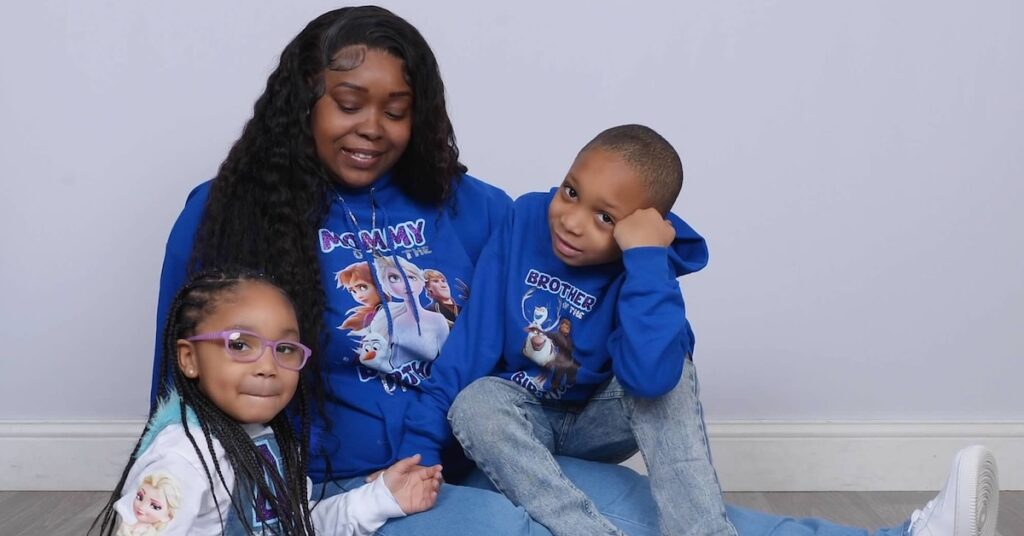
Nobody really tells you how hard it is trying to get help for your child when something isn’t right, especially when you’re a Black mom raising a child with special needs in a place where nobody really understands you. Not being from Wisconsin, I had no idea how much of a struggle this was about to be. I thought if something was wrong, you take your child to the doctor, speak up and they help you.
That’s not what happened.
When my son was younger, I stayed on top of everything. Every appointment, every check-up, I was there. And every time, I said the same thing, “Something isn’t right. He’s not meeting milestones.”
I was literally crying out for help, and it felt like nobody was listening. I would leave those appointments feeling crazy, like maybe I was doing too much. But deep down, I knew my child. I knew something wasn’t right.
A diagnosis
What’s crazy is, it wasn’t even the doctors who helped me figure it out. It took me putting my son in day care with a Black woman for things to finally click. And I’m not going to lie – she made me feel low. Like, really low about my son and his developmental stages.
But at the same time, I’m grateful for her because she was the first person who actually kept it real with me and pointed me in the right direction. Because of her, we started getting answers: an autism and speech delay diagnosis and therapy, actual help.
And I kept thinking the whole time, “Why didn’t the doctors do this? Why did it take someone outside the system to finally see what I’ve been saying?”
Even after we got started, it didn’t get easier. That’s when I learned that just because your child qualifies for services doesn’t mean you’re actually going to get them. We had to go through so many hoops just to get basic things. It felt like you had to know somebody who knows somebody just to even find out what’s out there.
And not being from Wisconsin made it worse. I didn’t have any connections, any guidance, ANYTHING. I had to figure everything out on my own while already dealing with everyday life challenges.
And it’s not just me. One 2024 Journal of Racial and Ethnic Health Disparities study called “Racial and Ethnic Disparities in Unmet Need for Mental Health Care among Children” said Black children are more likely to have “unmet mental health needs,” even when they qualify for help. That right there explains everything I went through.
How are you eligible, but still not getting what you need? It felt like the help was there, just not for us in the same way it was for other people.
Finding a way forward
Over time, I had to stop being quiet. I had to learn how to speak up and advocate for my son, even when it made people uncomfortable. Because the truth is, Black children don’t get treated the same.
When they’re struggling, it’s not seen as mental health. They get labeled “angry,” “bad” or worse. They get treated like a problem instead of a child who needs help.
And that’s not fair.
I even started going to moms’ groups, even though I was the only Black woman most of the time. It was uncomfortable, but I went anyway because I needed to learn.
And what really got me was hearing these moms talk about the same programs I was in but having completely different experiences. They were getting things approved, getting support, getting what they asked for.
I remember one mom talking about wanting an $18,000 fence and being upset she couldn’t pick the color. Meanwhile, I’m over here fighting just to get a $37.99 swing replaced for my son. Fighting hard, too. That right there told me everything I needed to know.
And it’s not just me seeing this. In the 2023 study “Pediatric Mental Health Care Treatment Needs More Often Unmet for Minorities,” it straight up says minority children are “less likely to receive needed treatment.” And I felt that, because I lived that. This isn’t just a coincidence. This isn’t just my situation. This is how the system works.
Sometimes it really feels like the people who are supposed to help act like it’s coming out of their own pockets. Like it’s a problem to give my child what he needs. And that’s not right. These are resources that are supposed to be there, but it don’t feel like they’re for us in the same way.
During a recent listening session about youth mental health at the UW Odyssey Project, social worker Brian Benford said he’s “worked in every community center around town,” and it’s “very rare you find staff of color doing work around mental health.”
And that didn’t surprise me at all. Most of the providers I’ve dealt with have been white. And I’m not saying they don’t care, but it’s different when someone actually understands you without you having to explain everything. Representation matters, especially when it comes to something as serious as mental health.
Even the Centers for Disease Control and Prevention reported in 2024 that youth mental health is getting worse overall. But what they don’t always show is how much harder it is for families like mine to even get help in the first place. It’s not just about mental health it’s about access, race, and being heard.
At the end of the day, it shouldn’t be this hard.
I shouldn’t have had to fight this much just to get my child help.
No parent should feel ignored when they know something is wrong.
We need more people of color in these spaces, more listening and less judging.
Because kids like mine deserve the same chance as anybody else, and right now, that’s not what’s happening.