By the time the puck drops on the 2026-27 season, the familiar rhythms of junior hockey in the Madison area will sound a little different.
For seven seasons, the United States Hockey League’s Madison Capitols have called Bob Suter’s Legacy20 Arena in Middleton home — a place rooted in local tradition, youth hockey and the legacy of Olympic gold medalist Bob Suter.
But soon, the team will begin a new chapter, a short drive away in the Madison suburb of DeForest, trading nostalgia for a modern vision of what junior hockey — and its surrounding community — can become.
For team president Juliette Makara, that transition represents something bigger than a change in address.
“We basically outgrew our old arena and decided, ‘OK, let’s try to see what else we can do,’” Makara said. “Our arena is a bit older, and we’re excited to move over.”
Makara, who oversees both business and hockey operations for the Capitols, has a front-row seat to the shift. Her day-to-day work spans everything from sponsorships and ticketing to league communications and game-day operations. It’s a wide-ranging role, and one that has given her insight into both the emotional weight of leaving Middleton and the opportunity waiting in DeForest.

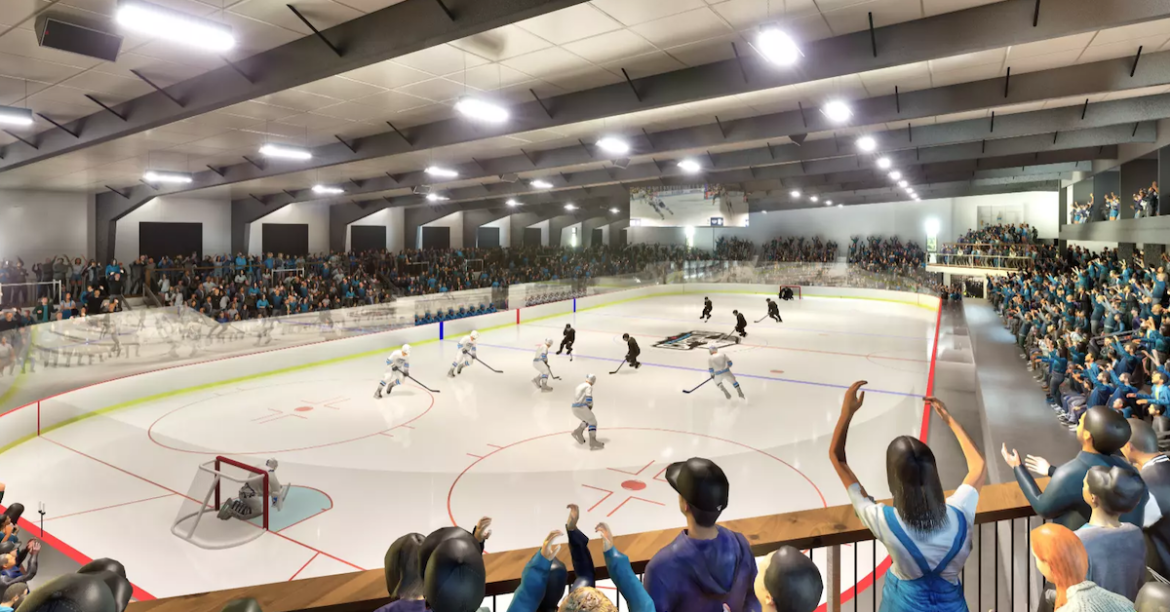
The move, officially announced on Dec. 2 after months of coordination with the United States Hockey League, will place the Capitols in the new LEGACY20 Arena at DeForest Yards, a 3,000-seat facility set to open ahead of the 2026-27 season. The arena will anchor a larger mixed-use entertainment district designed to operate year-round, not just on game nights.
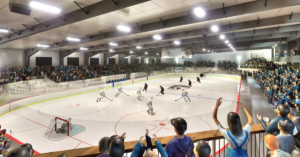
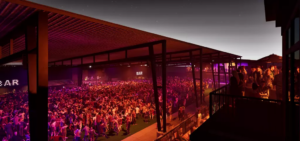
Renderings of the project hint at that broader vision: a center-hung videoboard, expanded concourses, premium seating and upgraded locker rooms inside the arena, as well as an outdoor rink that transforms into a community gathering space in the summer, alongside a restaurant, brewery and event space.
“People were excited when they saw all the renderings because it’s not only an arena,” Makara said. “It’s an outdoor space as well. So, people were really excited that there was possibly more opportunity to do different kinds of events in DeForest.”
That excitement has been reflected in early public reaction. According to Makara, feedback following the announcement leaned overwhelmingly positive, particularly as fans began to envision the arena as more than just a hockey venue.
Still, transitions rarely come without trade-offs.
“Not everyone’s going to be happy when we say we’re moving from Middleton,” she said. “We know that we’re potentially going to lose some ticket buyers. If they live in Dodgeville right now, they have quite a drive to get to Middleton, but then it’s going to be an even further drive to DeForest.”
The move adds roughly 25 to 30 minutes to the drive for some fans. For others, particularly those closer to Madison’s northeast side, it may be more accessible. Makara acknowledges both realities.
“It’s nice because we’re not leaving the Madison, Dane County area,” she said. “We’re still staying within it, so a lot of our fans are going to be moving over with us. We do know that we’re going to be losing some just because of the distance, but hopefully gaining more. We’ve had a lot of interest in DeForest, so we think we’re actually gonna turn out positive in that aspect.”
That balance act, between honoring tradition and embracing growth, sits at the heart of the Capitols’ transition.
In a letter announcing the move, team owner and chairman, 20-year NHL veteran Ryan Suter, emphasized that duality, reflecting on his father’s legacy while looking toward the future.
“Bob Suter’s LEGACY20 Arena in Middleton has played a meaningful role in our journey,” Suter wrote. “For seven seasons, it has been a place where players have grown, memories have been made and our community has come together.”
At the same time, he framed the DeForest project as an investment in what comes next: “This move creates an entertainment destination unlike anything we have had before… and reinforces that Madison is a premier destination for player development at the highest level.”
That emphasis on development is not just organizational — it’s also strategic.
Across the United States Hockey League, teams are navigating an increasingly competitive landscape. Recent changes allow NCAA men’s ice hockey programs to not only compensate athletes but also shop for talent in leagues outside of the United States. This means junior teams are competing not only with each other but with Canadian leagues and other development pathways.
“It’s huge for the league,” Makara said. “It’s a big recruitment thing. Everyone loves to see what’s shiny and new. We’re going to have a brand new locker room, and the renderings are incredible. It’s a huge upgrade for our players.”
The new facility is designed with that in mind. Expanded training areas, modern locker rooms and upgraded player resources aim to position Madison as a destination for top prospects. For players deciding where to spend critical development years, those details matter.
Right now, the Capitols’ current setup reflects the strain of growth. Ice time is in high demand across the county, with multiple organizations sharing facilities in Middleton — including youth programs, high school teams and community groups.
“Before DeForest was even built, we had teams from the AAA program that were going to practice in Verona and Waunakee,” Makara said. “They weren't able to schedule all of their games here just because of the need for ice. So that was a really big reason why the DeForest project even started — the need for ice.”
The new arena, which includes both an indoor and outdoor sheet of ice, is expected to ease that congestion. It also allows for a redistribution of resources, with some programs shifting between Middleton and DeForest to maximize availability.
In that sense, the move is not just about the Capitols – it’s about expanding access to hockey across the state.
“With this transition, we are proud to continue supporting the Middleton community by
increasing ice availability,” Suter wrote in his letter announcing the move. “This expansion allows us to carry my dad’s mission forward, opening doors for more kids, families and young athletes on both sides of the city.”
Even with change on the horizon, inside the organization, the mood reflects optimism rather than nostalgia.
“I wouldn’t say it’s bittersweet,” Makara said. “Overall, we’re very, very excited. It’s going to be a huge upgrade for our players, staff and all the teams.”
The final season in Middleton has served as both a farewell and a celebration, a chance for fans to reflect on what the arena has meant while looking ahead to what’s coming.
For Makara, the focus remains on the finish line of the process.
“I’m excited for when it’s fully done and we’re all moved in,” she said. “I’m not looking forward to the moving process, but when everything’s set, we’re very, very excited for it.”
That sentiment captures the essence of the Capitols’ moment: a team grounded in tradition, stepping into transition.
In DeForest, the ice will be new. The lights brighter. The experience broader. But the underlying goal still remains the same as it was decades ago when Bob Suter first imagined a place for young players to grow the game.
As he would say, “It’s all about the kids.” And now, it’s about where that next generation will play.