Madison is known for its vibrant arts scene, from theaters featuring comedy, music and plays, to museums and visual arts institutions.
“The arts improve people’s lives, and you really want everybody to have a seat at the table,” said Tom Klubertanz, guest director of the Overture Center. Disabled audiences “deserve to have all the rights and access to the enjoyments in life” that are available to anyone else, he added.
Madison’s museums, theaters and more are exploring new ways to help ensure disabled audiences have a good experience. In the past, accommodations from ASL interpreting services, KultureCity sensory bags, tactile tours, and many more weren’t provided due to lack of resources and lack of awareness.
Today, though, the disabled community has a greater chance to be a part of the experience at these community spaces. Art, theater organizations, museums and ASL service providers have all evolved and made a commitment to enriching the lives and experiences of all audiences.
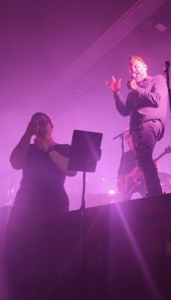
The art and theater organizations increasingly provide ASL interpreting services at plays and performances to accommodate attendees who are deaf and hard of hearing. “Every patron deserves the deeply human experience of sharing and participating in art,” said Bernie Ludi, a tech and design specialist with ACT Interpreting. “Interpreting services ensure equivalent access to such experiences for deaf and hard of hearing people.”
When it comes to the performances or songs, it’s not all in the words, it is in the tone and delivery and a skilled interpreter can convey what the sound means and and how it feels, according to Ludi.
ACT Interpreting makes monthly social media announcements and email blasts notifying the community about upcoming interpreted events, and typically ACT assigns interpreters for one showing of each production, said Leigh Whisenant, who founded ACT in 2023 and now works as one of its interpreters.
Here are more ways leading arts institutions in Madison are taking steps to welcome increasingly diverse audiences.
Overture Center of the Arts
The Overture Center of the Arts has a long history of providing services to people who are deaf or hard of hearing, autistic, visiting in wheelchairs or blind or visually impaired.
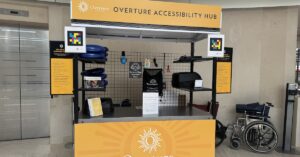
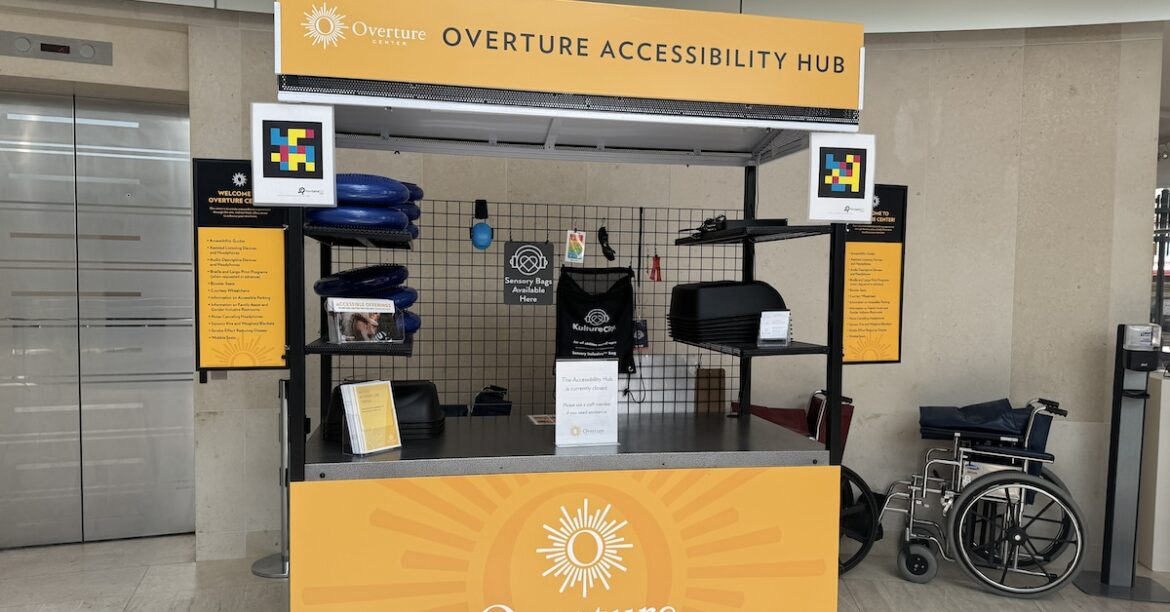
Many of the center’s services for the disabled are now combined in the theater’s accessibility hub, which has audio description devices, assistive listening devices and wheelchairs. ASL interpreters now also appear at scheduled Overture Center shows, but even if there aren’t any interpreters booked for a specific performance, patrons can request them. The Overture Center also provides open captions for film screenings.
The center installed wheelchair ramps between West Dayton and Mifflin Streets in 2004 and offers wheelchair seating. In addition, the Overture has also provided assistive listening devices or headsets to patrons since 2004.
The hub also offers large print Braille programs, and in 2023, the center started giving tactile behind-the-scenes tours for the blind. The tactile tours for such shows as “Jesus Christ Superstar,” “The Lion King” and “Wicked” have been designed to give blind audience members exposure to costumes, props, sets and artworks using touch.
In October 2024, the Overture acquired KultureCity sensory bags for people with sensory needs from autism, PTSD or anxiety. The bags have noise-canceling headphones to reduce loud sounds and fidget tools to help regulate stress or anxiety to help individuals to focus. Sunglasses help lower visual stimulation from bright lights, and weighted lap pads provide calming pressure and visual communication feeling cards to show how nonverbal individuals are feeling.
Kluberantz said that in developing the accessibility hub, he and others at Overture talked to people in the disabled community and learned about “a thing called disability fatigue where people get sort of exhausted with always having to be their own advocate.” And now, “it’s neat for them to come into our building and see all of these things right out in the open for them,” he added.
The hub is free to use, but patrons must bring an ID.
Children’s Theater of Madison
The Children’s Theater of Madison partners with the Overture and Madison Youth Arts to showcase the many performances the theater presents at the Overture Center.
The theater provides assistive listening devices and headphones, and patrons can even connect to the microphone system through the theater’s bluetooth system. It provides audio descriptions for shows so blind attendees can listen and understand what is happening on stage.
Before one of the CTM’s performances of “Cinderella,” art director Brian Cowing led audience members from Wisconsin Center for the Blind and Visually Impaired on a tour of the production’s costumes, set and props. The tour was especially important for helping these audience members understand the show’s transformation costume scene, said Marielle Shiring, CTM’s patron experience manager.
Cowing said that experience inspired him to learn how he can bring it again to future performances.
CTM also provides KultureCity sensory bags for neurodivergent attendees and wellness rooms where audience members can take a break if they feel overwhelmed.
“At the end of the day,” the point, said Marielle Shiring, CTM’s patron experience manager, “is to give all patrons, no matter what their disability, the full experience at the theater in a way that makes them feel welcome and included to the best of our ability so they can experience the story and what is going on stage.”
Chazen Museum of Art
The Chazen Museum of Art on the UW–Madison campus has also expanded accommodations for disabled patrons. The museum has full wheelchair accessibility throughout its galleries and event spaces, and it offers ASL interpretation for deaf patrons upon request and provides communication access realtime translation for deaf and hard of hearing people attending events.
In the fall, the museum plans to offer visual audio descriptions of artworks to enhance accessibility and inclusivity.
“We are a place that is inclusive for many. We believe art is for all,” said Berit Ness, chief engagement officer at the Chazen.