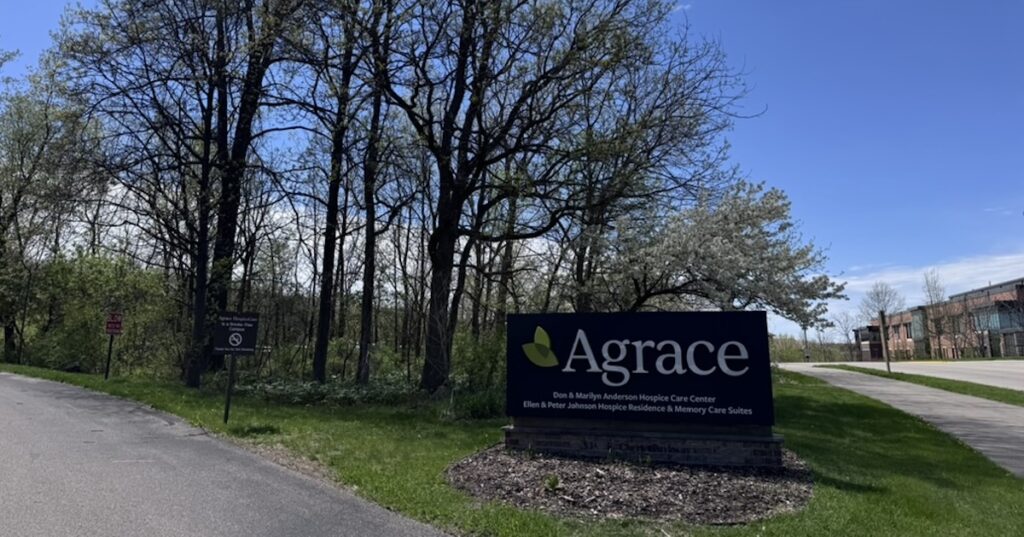
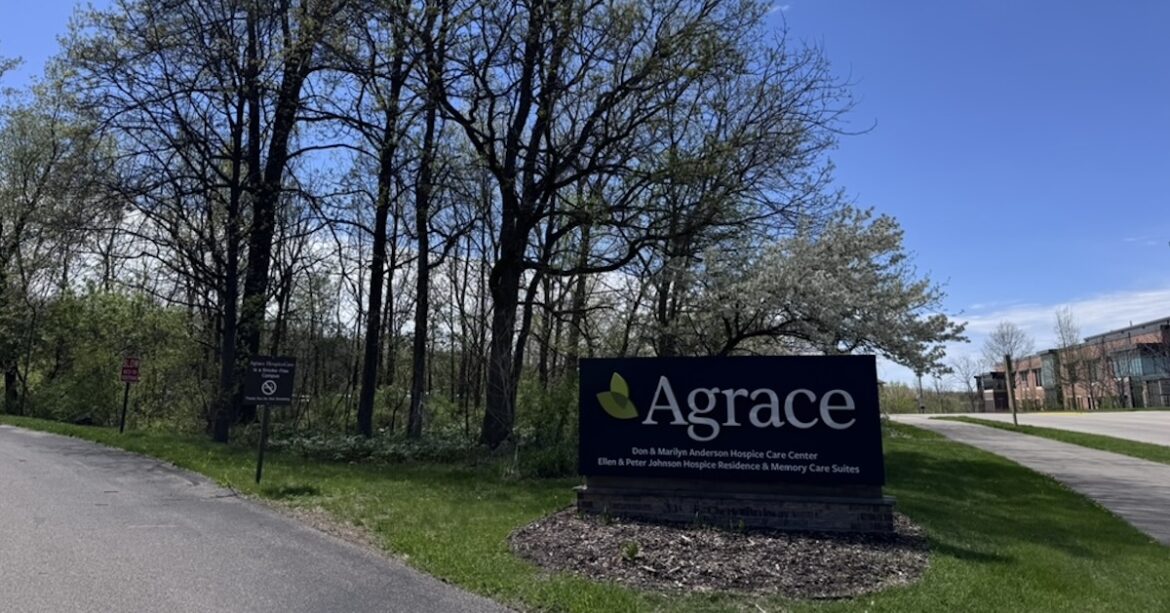
Madison’s nonprofit hospice provider Agrace is opening the first dementia village in the United States, redefining independence and the value of living for those in memory care.
In a typical long-term memory care community, the bedroom doors are closed, with residents feeling trapped, and often they are required to be accompanied when exiting. There is only one, maybe two, spaces for everyone to gather. With this, a sense of independence is taken away.
In fact, “that loss of independence and function are more distressing than the thought of impending death,” residents reported in a study conducted by the JAMA network. According to the same study, after five years of living in long-term care, 20% of at-risk residents were unable to make day-to-day decisions for themselves.
“A lot of us do dread the idea of long-term care, and not without reason; there’s loss of agency, loss of familiarity, loss of the kind of socializing we want to do,” said a caregiver who asked to be anonymous.
For 10 years, this caregiver held the title of sole caregiver for her husband, who recently passed. Her husband lived with dementia, and together they ultimately decided to care for him in the comfort of their own home.
“Moving into long-term care can be a heartbreak for people,” the caregiver said. “They leave so much normality behind, and so, having the opportunity to live i

n a community like the dementia village, where everything is more like where they’ve lived throughout their lifetimes, would be so much more welcoming.”
The dementia village concept, a shared community where residents can practice an autonomous lifestyle while receiving the support they need, may be the answer to improving long-term care at a limited emotional cost.
Reimaging long-term care
The vision comes from the first of its kind: The Hogeweyk, located in the Netherlands and founded in 2009. Eloy van Hal, senior advisor and founder of The Hogeweyk, continues to guide Agrace through the development process while emphasizing the importance that Agrace strictly stays true to the Hogeweyk philosophy, prioritizing residents’ autonomy and freedom of choice.
“Agrace believes that we will be the first [in the United States] to be able to truly implement the spirit of the Hogeweyk model in a very similar setting to what you would see at the Hogeweyk, but with State of Wisconsin licensing as a community-based residential facility,” said Liz Kopling, Agrace’s assistant vice president of marketing and communications.
Why Wisconsin?
The state of Wisconsin wants the village to be a success, as it is a national leading innovator in aging-related fields. Agrace has worked closely with the Wisconsin Department of Health Services to comply with required regulations and avoid future hurdles, according to Wendy Betley, senior program director of the Wisconsin Chapter of the Alzheimer's Association.
“Wisconsin had been hearing a lot about dementia villages in Europe, and so I think that’s probably where it influenced itself,” Betley said. “And as Wisconsin is, they don’t take no for an answer, and it just went forward. Wisconsin is really a mover and shaker type of state. We’re always looking for new innovations and new things to do.”
Historically, Agrace called itself “built by the community for the community,” according to Kopling. Adhering to this, Ellen and Peter Johnson, a Madison couple leading a $30 million capital campaign to build the village, have committed $7 million to its development because over the past decades, they have seen the need for innovation in aging communities. The village will be named The Ellen and Peter Johnson Dementia Village in their honor.
With the village eight months away from opening, Agrace continues to work through cost logistics. However, Agrace expects the residential cost of the village to be in line with other memory care options in the community, Kopling said. It plans to use its Care-For-All endowment to allow people to live in the village through partial subsidization if they have financial needs.
“It is part of our nonprofit mission to ensure that nobody is turned away for their inability to pay for the care they need,” Kopling said. “So, without knowing exactly how that will look for the dementia village, it really is the spirit of who we are as a nonprofit organization to ensure that this is a community for everyone.”
There is an unavoidable gap between serving everyone and being practical, as there is only space for a fraction of those who have shown interest. Even with Agrace’s commitment to compensate for costs, in line with most health care practices, there are barriers.
"The cost of memory care is prohibitive for most families today, and this question of sustainability and affordability will likely arise for Agrace,” Johnson said.
“Unless attention is paid to ensuring the financial sustainability, affordability and geographic equity of Dementia Villages in the U.S., they can easily become a 'luxury' dementia care option accessible only to few,” Johnson said.
Envisioning a new type of home
The dementia village will resemble a smaller town, with resident and caregiver housing, an activity space, and food and beverage stores, all connected by a large courtyard in the center of the village. With so much accessible to residents, they will have the ability to make decisions on their own in their own time.
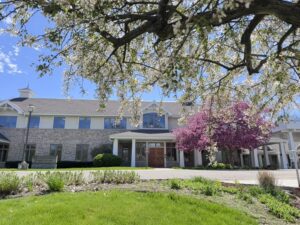
“If they can walk to the grocery store, or they can walk to the restaurant, that’s independence. That's really where the dementia villages are helpful. It’s a controlled environment that still provides that independence,” Betley said.
Residents can not only enjoy autonomy in this setup, but they can also preserve the familiar routines and lifestyle they have always known. Inspired by The Hogeweyk’s lifestyle model, Agrace is working with Glocalities, an international research firm, to create a tool that places the 64 residents into eight separate households based on lifestyles, personalities and experiences.
“If someone's living in a home that's decorated in their preferred style, where the music, the television and the conversation with the other household residents are their preferred topics of conversation, it reduces friction, improves quality of life and makes people feel like they're truly living as they normally would if it weren't for their dementia diagnosis,” Kopling said.
One of the most important aspects of the Hogeweyk model is socialization. Therefore, although each resident will have a private bedroom, they are highly encouraged to socialize in the home's living spaces and community center, and even cook shared meals all together.
“Instead of a traditional memory care cafeteria or where food is brought to residents in their room, this is something completely different,” Kopling said. “Having the caregivers involve residents in chopping and stirring, tasting or setting the table really gives them a sense of normalcy that helps them feel engaged and improve their activity and satisfaction of living in that home environment.”
As the Agrace Foundation gift officer Jenni Lien noted, people from all over the country have shown interest in Agrace’s village, but the majority of anticipated residents will be from Wisconsin. So, to showcase Agrace's strong Midwestern roots and make residents feel more at home, four Wisconsin-inspired themed exhibits will be interspread throughout the village, from a woodsy lodge to a tractor surrounded by haystacks.
Building community
Yet, the village won’t just accommodate people with dementia. Agrace is a “community-based health care agency," so it is essential to its mission that it is also contributing to the lives of caregivers, family members and community members.
“There are more people around the caregiver who can help, assist and jump in, so there are more people they can lean on,” said Elma Johnson, BOLD Public Health Center of Excellence on Dementia Caregiving coordinator “It's almost like an embedded support community,”
With studio-style workforce housing dorms, paid caregivers are given the opportunity to live on the campus free of charge in exchange for working at the village, all while wearing their everyday clothing.
“A lot of the time after [caregivers] leave, the residents get really lonely and confused. So, I think the caregivers living there overnight can make it feel a lot more homey and less confusing for them,” said Anna Stafford, a certified nursing assistant in the Alzheimer's unit at Capitol Lakes, a senior living community. “I think it can get confusing that some people come in with scrubs and some people don't.”
This also enables students at local universities, colleges and educational institutions in health care or other careers to make time to fully commit to their craft, relieving them of financial burdens and logistical stress.
“Rent is so expensive nowadays, especially in Madison. Living where you work could be pretty helpful, and it would definitely attract more people,” Stafford said. “I think you can build some really strong relationships with your residents or patients, too.”
For family caregivers, it removes the around-the-clock responsibilities, constructing a moment to breathe.
“We do not have capacity in our current long-term care system for all of us,” Johnson said. “That's why we need to build supports. And villages, like dementia villages, in smaller communities, can support us as we age in place and as we live with dementia in place in the community setting.”
Agrace has set an intention for more activity to attract family and community members to engage. Having the community intertwined with the village through community-welcomed events in its on-site theater or Agrace’s adult day program normalizes the experience of cognitive decline and memory loss.
“There’s reluctance to go into these institutional caregiving communities. And it’s hard for people. I mean, a lot of people just won’t come and visit. They just won’t,” said the caregiver. “But when you see how [the village] is designed and how welcoming and familiar things are, I think the person with dementia would be so much more likely to have family happy to gather there.”
Taking back the narrative
Dementia is still widely misunderstood, and Americans have to face the realities that a lot of people are, unfortunately, uncomfortable with it. According to the World Alzheimer Report 2024, “88% of people living with dementia indicate experiencing discrimination” globally.
“We are quite of an ageist society, and, therefore, because we see dementia as a disease or as something to be prevented or cured, long-term care and our health care emphasize medical care rather than social supports,” Johnson said.
An anticipated friction point is shifting people’s mindsets because it is something most Americans have never heard of, Kopling said. But, the villages are intended to be without certain stigma.
Gaining ground
The Hogeweyk shows immense promise for the village's success. As stated in The Economist, “in 1993, when [The Hogeweyk] was still a regular nursing home, 50% of patients were being given antipsychotic drugs. In 2015, only 8% were,” affirming that when older people are treated with dignity, their cognitive abilities improve.
“Failure would be to not stay true to the Hogeweyk model and to end up with something that feels and looks like any other memory care facility,” Kopling said. “Having a future where people have the care and access to the care that they deserve to live with dignity and autonomy, where and when they need it, would be my vision for success.”
As the first dementia village of its kind in the United States, there is no existing blueprint. This revolution provides hope to everyone affected by dementia, from individuals living with dementia to their loved ones and caregivers.
“I’m grateful to learn that the Agrace model is being introduced in the U.S. I hope the Madison Agrace community thrives and inspires similar communities to sprout up around the country,” the caregiver said. “[My husband] would have been so happy there.”