Every spring, the Wisconsin Department of Natural Resources stocks hundreds of thousands of walleye fry (newly hatched walleye) throughout the state. As the climate continues to change, however, the management strategies behind one of Wisconsin’s most culturally significant species may need to adapt.
Walleye are a sportfish native to many inland waters across Wisconsin and have long been a culturally important species. In the ’80s and ’90s, they even sparked controversy between anglers and Ojibwe rights-holders in what came to be known as the Wisconsin Walleye War. This clash over legally-protected spearfishing treaty rights ended with a 1991 injunction against protesters who were leading violent and often racist demonstrations at boat launches.
To continue providing these longstanding recreational opportunities for all walleye anglers, many inland lakes across Wisconsin are stocked with either walleye fry in the spring, small fingerlings in the summer or large fingerlings in the fall. Here in Dane County, the Madison Chain of Lakes is no different, and these regular routines help sustain some of Wisconsin’s most popular urban fisheries.
In Madison, Lake Kegonsa, Lake Waubesa and Lake Mendota all get stocked with walleye.
According to the Department of Natural Resource’s stocking database, Lake Kegonsa was most recently stocked with 122,532 small fingerlings in summer 2025; in 2024, Lake Waubesa received 73,714 small fingerlings in the summer, and Lake Mendota received 49,252 large fingerlings in the fall.
While walleye are considered native to this system of lakes, stocking was first introduced in the 1880s to help support the naturally occurring population and offset angling pressure.
A 2019 fishery survey of Lake Mendota states, “There is some evidence of walleye natural reproduction in the lake... but it is likely limited and not enough to sustain an abundant enough walleye population to provide recreational angling.”
Information like this leaves fisheries managers with the task of determining the most effective stocking rates based on a combination of angler demand, financial feasibility and survival rates gathered from surveys. Additionally, climate change is another factor to consider.
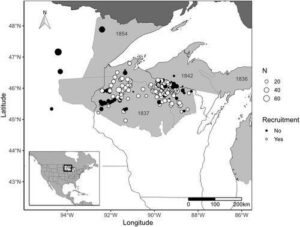
In 2023, a paper published in Limnology and Oceanography Letters found that in many Wisconsin lakes, increasingly unpredictable ice-off dates are having negative impacts on walleye populations.
Historically, walleye spawning has been closely aligned with when ice melts on lakes. However, due to climate change, ice-off is shifting earlier, and walleye behavior has not been able to keep up. This happens because in early ice-off years, walleye hatch too late to capitalize on the peak food abundance that occurs immediately after ice-off, which in turn lowers their ability to survive.
To an extent, these behavioral mismatches and low reproduction years can be offset by stocking. But, if populations continue to decline regardless, the question then becomes, “Is it worth it?”
That’s where the Resist-Accept-Direct model comes into play. This decision-making framework helps resource managers evaluate how they can respond to ecosystem changes. They can resist the change and use management tools to try to maintain the system’s historical status quo. They can accept the changes and work to ease transition periods, or they can try to direct the changes to a more favorable outcome.
In the case of lakes, fisheries managers can use the framework to think about how they choose to stock walleye in the face of changing ecosystems.
Colin Dassow, a fisheries research scientist for the Wisconsin Department of Natural Resources, helped create a Wisconsin-specific tool for this very purpose back in 2022.
He explained how, in addition to biological capacity, making a decision under the framework means taking into account social and fiscal feasibility as well
“There are the lakes where we could continue managing for walleye but don’t have the resources to do so, as well as lakes in which it just won’t work no matter what we try,” Dassow said. “When the science suggests it’s not viable, we’ll have to think hard about whether the resources being allocated to that lake could be more fruitfully spent on another lake in need.”
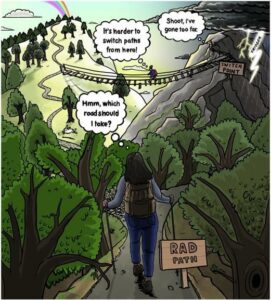
“What we can do is continue engaging with stakeholders to understand where they’re at,” he said. “That’s why managing fisheries is as much about understanding people as it is about understanding fish.”
As for whether or not walleye could disappear from southern Wisconsin entirely, however, Dassow didn’t seem worried.
He predicts that the state in general, and southern Wisconsin more specifically, will continue to have walleye for years to come, but it’s likely that fewer places will be able to support fishing.
“The tricky part is knowing how many fewer populations we’ll have, where we’re likely to lose them, and when that loss will happen,” Dassow said. “Knowing those answers determines who is impacted, how severely and when.”