This month marks the 25th Sexual Assault Awareness Month in which survivors, advocates and community members spread awareness and contribute to prevention of future sexual assault, abuse and harassment.
For Natalie DeMaioribus, the senior instructor and coordinator of Chimera, a self-defense program run by the RCC Sexual Violence Resource Center (formerly the Rape Crisis Center), this advocacy can be as simple as teaching people in her workshops how to yell forcefully if they’re being attacked or assaulted.
As the longest-running prevention program hosted by RCC, Chimera provides a safe place for individuals who want to learn to protect themselves and identify which defense techniques work best for them. DeMaioribus’s workshop exercises include assertive communication techniques, such as having participants go around the circle, shouting “No!” at top volume and role-playing to practice responses to unwanted advances. Additionally, she demonstrates physical defense tactics like how to hit an attacker’s face hard with the heel of the hand, which can create enough space to break free and escape a perpetrator's grasp. Together, these verbal and physical practices can help survivors of sexual violence-related trauma rebuild confidence in their ability and benefit anyone looking to gain confidence in protecting their bodies and boundaries.
Practicing realistic dangerous scenarios can help people feel more prepared, and “knowing you have the tools to fight” off potential attackers can go a long way toward building confidence, DeMaioribus said in a workshop she ran at UW–Madison on April 9.
“I love getting to see people explore their power in a different way than we typically do,” said RCC’s UW Evening Advocate Kendall Lister, who assisted in the workshop. Lister works alongside two other RCC UW advocates who recognize sexual violence, on campus and beyond, as a big problem that is vastly underreported.
According to the American Psychological Association, up to 25% of female college students have reported being victims of campus sexual assault, and an estimated 90% of assaults on campuses are not reported. Beyond college, nearly half of women (45.1%) and more than one in six men (16.9%) in the U.S. have experienced some form of contact sexual violence in their lifetimes, according to new data the CDC released in January.
DeMaioribus and Lister explained at the campus workshop that many sexual violence survivors express trauma responses such as feeling guilty or blame for their abuse. Other common long-term mental health effects of sexual assault include depression, anxiety and PTSD.
To combat this, RCC offers 24/7 free and confidential care to any survivor of sexual violence looking for emotional support, access to resources, understanding legal options or having someone walk them through the process of health exams or any interaction with law enforcement.
“At any point during either a current perpetration or dealing with the past perpetration, we can be there with you,” RCC Executive Director Dana Pellebon said in an interview.
Pellebon noted that forensic nurse exams and court hearings can be incredibly distressing immediately following an assault, which may prevent survivors from reporting their abuse. She is excited that RCC will soon have its own forensic exam room at its main office near East Towne, so individuals hoping to receive exams won't need to leave the center.
“We are working very hard to be the stopping place for survivors where they know they are going to be wrapped in information and care,” Pellebon said.
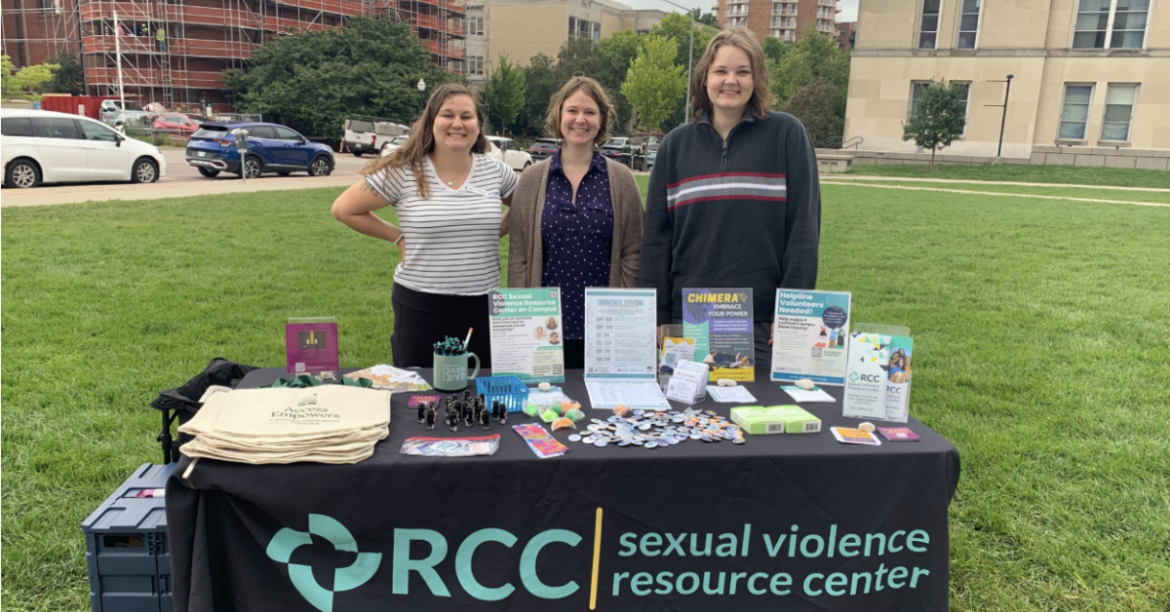
In addition to its main office, RCC has three additional offices located at Madison College, Edgewood College and UW–Madison. For UW campus advocate Mikayla Sandin, providing accessible support to students is key.
“College students are the most vulnerable demographic in terms of sexual assault,” so to be able to acknowledge and help them through incidents “and do the prevention work on campus is really important,” Sandin said in an interview.
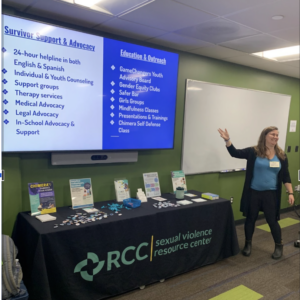
While supporting survivors through and after an assault is central to the services offered by RCC, the team also focuses on prevention. Whether it is a Chimera workshop or a presentation given to local high school students about consent, boundaries and bystander intervention, RCC hopes to stop instances of sexual violence before they occur.
“When kids have information, they’re really great about using that information,” Pellebon said, referring to high schoolers she’s encountered during outreach. “It’s only when kids don’t know how to talk about it and where to get help that it becomes a problem.”
As an organization that is not formally affiliated with any schools in Dane County, advocates working for RCC are not mandated reporters. Unlike school employees, social workers and counselors who are mandated by law to report incidents of sexual violence to a county or law enforcement, RCC employees are not legally required to report suspected child abuse or neglect. As a result, children who are not ready to report to law enforcement may feel more comfortable turning to RCC advocates as a first step in seeking help, Pellebon said.
According to Pellebon, 92% of youth know their perpetrators, and while school policies that require staff to report abuse to parents or child protective services are intended to protect children, these processes can sometimes be harmful. Reporting may contribute to additional trauma for children, including fear of retaliation from an abuser or having to relive their abuse through repeated retellings. According to Pellebon, young survivors can be more honest with RCC advocates and maintain a sense of control over their situation.
Sandin said the most important part of her work as a campus advocate is helping survivors regain the sense of control that was taken from them. “My job is to empower survivors to make sure they have all of the up to date accurate information about what their options are so that they can make the best choice for themselves,” she said.