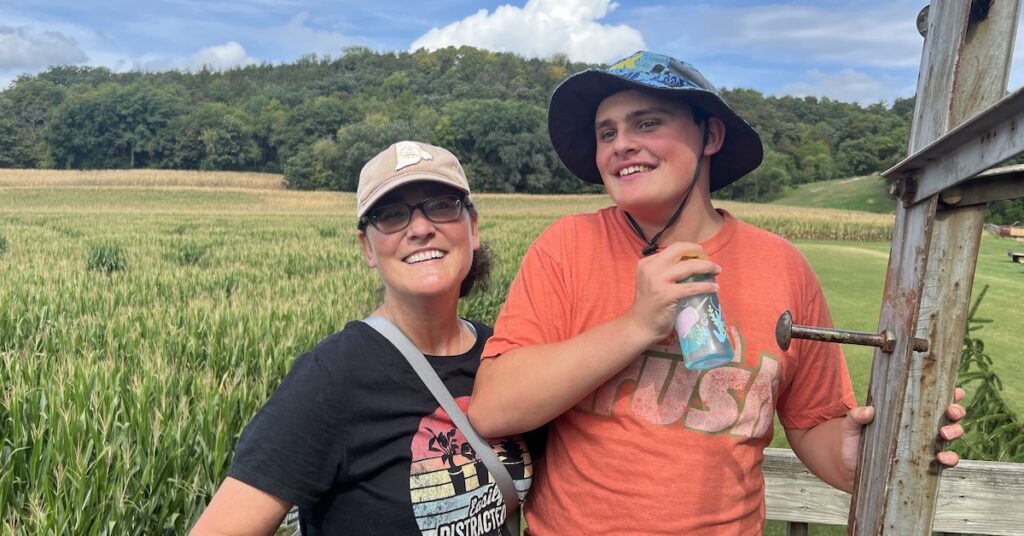
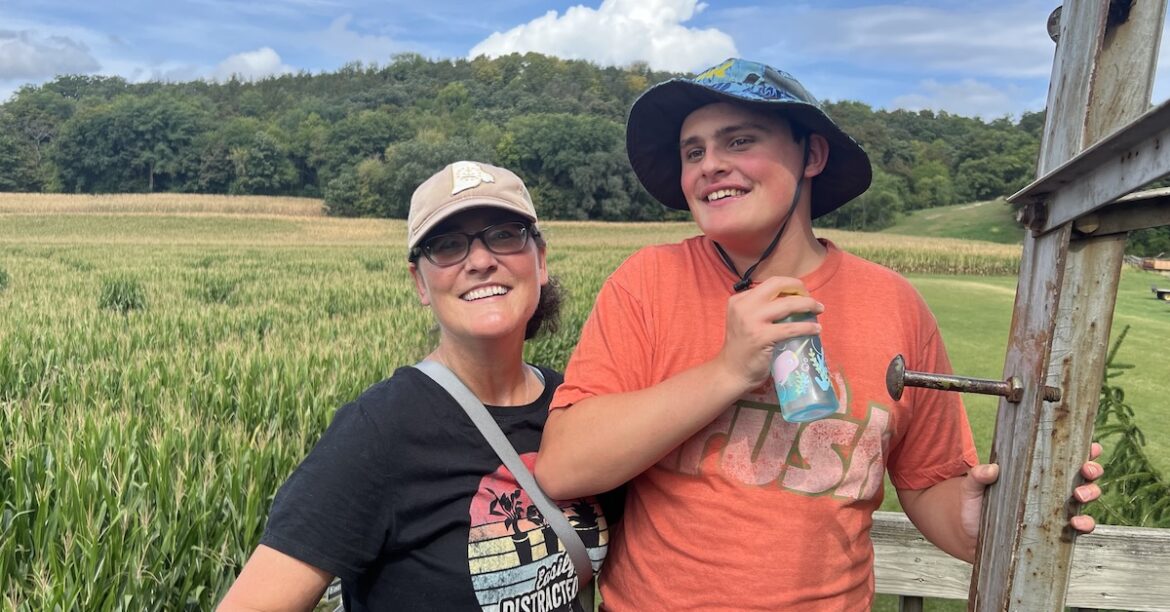
When Signe Mbainai’s son first went to kindergarten, she included all his documents and behaviors. He was her second child to be diagnosed with autism spectrum disorder. She had this covered.
Or so she thought.
In his first year he ran away from teachers 29 times, making it off campus twice.
“I was very upset. I did all the things I was supposed to do. I informed the school district,” Mbainai said. “And it was all for naught.”
Once, a stranger found him wandering and brought him back to the school.
An autism diagnosis creates a whole new landscape parents must navigate. As parents learn to accommodate, understand and care for their child in new ways, they transform into advocates. Many parents may not be equipped with the tools required to be an effective advocate, leaving their child without a voice.
According to a 2022 report from the Centers for Disease Control and Prevention, there has been an influx in children diagnosed with autism in Wisconsin, reaching levels higher than the national average. In 2022 1in 26 8-year-olds in Wisconsin received an autism diagnosis, up from the national average of 1 in31. In Madison, a vast network of advocacy and parent groups support families as they fight to educate their child.
Mbainai, mother to two children with austism, was first thrust into this landscape when a teacher recommended testing for her daughter. After a diagnosis, the common first step is to seek an individualized education plan, known as an IEP.
“Advocacy is something I am trained in. I know once I understand the lay of the land, I can ask for certain things,” Mbainai said. “That does not come easy to a lot of people.”
Despite her background as an attorney, Mbainai struggled to gain footing.
“My first IEP meeting was a blur. It’s not the fault of the school district. I want to emphasize that. Navigating the emotions around your child’s challenges, having these meetings and big discussions in front of strangers — it’s pretty daunting,” Mbainai said.
Districts are given deadlines by the Department of Public Instruction: Within 60 days it must evaluate the child, and within 30 days after that, it must create the IEP.
For parents, this waiting period may feel like an eternity.
“I do hear often that people are frustrated, ‘I took my child to the Waisman Center, why can’t you just write the IEP,’ And by law we cannot,” Nancy F. Molfenter, Madison Public School District Interim Executive Director of Student Services said.
Mbainai was encouraged to join Children Long-term Support System by the school district. The government funded program uses Medicaid funds to help children with disabilities. With the aid of the support system, Mbainai got more out of her IEP meetings. She was able to advocate for her children.
“The system is not user friendly, and if you are not connected, you do not know where to go,” Mbainai said.
Mbainai, now armed with an arsenal of tools, knowledge and community, informs and supports both her own children and those across the district.
Nearly one-half of children with autism attempt to run away from school or caregivers. Known as elopement, this problem can cause great safety concerns. Mbainai leads the fight for the district to put up fences around school playgrounds.
Anna Moffit, a parent of a student in the 18-21 Transition program, who used to work as a peer specialist at the now-defunct Wisconsin Families Ties, said schools may face various challenges limiting effective implementation of IEPs.
The 18-21 Transition program helps students with disabilities as they transition into young adulthood, which varies from employment to college or independent living. Moffit’s son has been in the district since he was young and has found great success, but challenges are moving targets, according to Moffit. Moffit credits his success in part to her ability to advocate.
When, for example, a family is asked to keep a child home during finals week, parents may not have the words or knowledge to advocate for their child, according to Moffit.
“Knowing I have a lot of privilege, I have a lot of knowledge — I myself will call that out, not just for my own kid, but because it's happening to kids everywhere,” Moffit said.
Efforts on the part of people like Mbainai and Moffit are just a couple of bricks in the necessary foundation of safety for these children.
It is the collective work of the disabled community, taking care of all families, not just one’s own, that pushes a system towards success, according to Moffit.
“I do not want any child to suffer unduly just because you do not have the right buzz words, or do not understand the process,” Mbainai said.