By Madeline Rodriguez
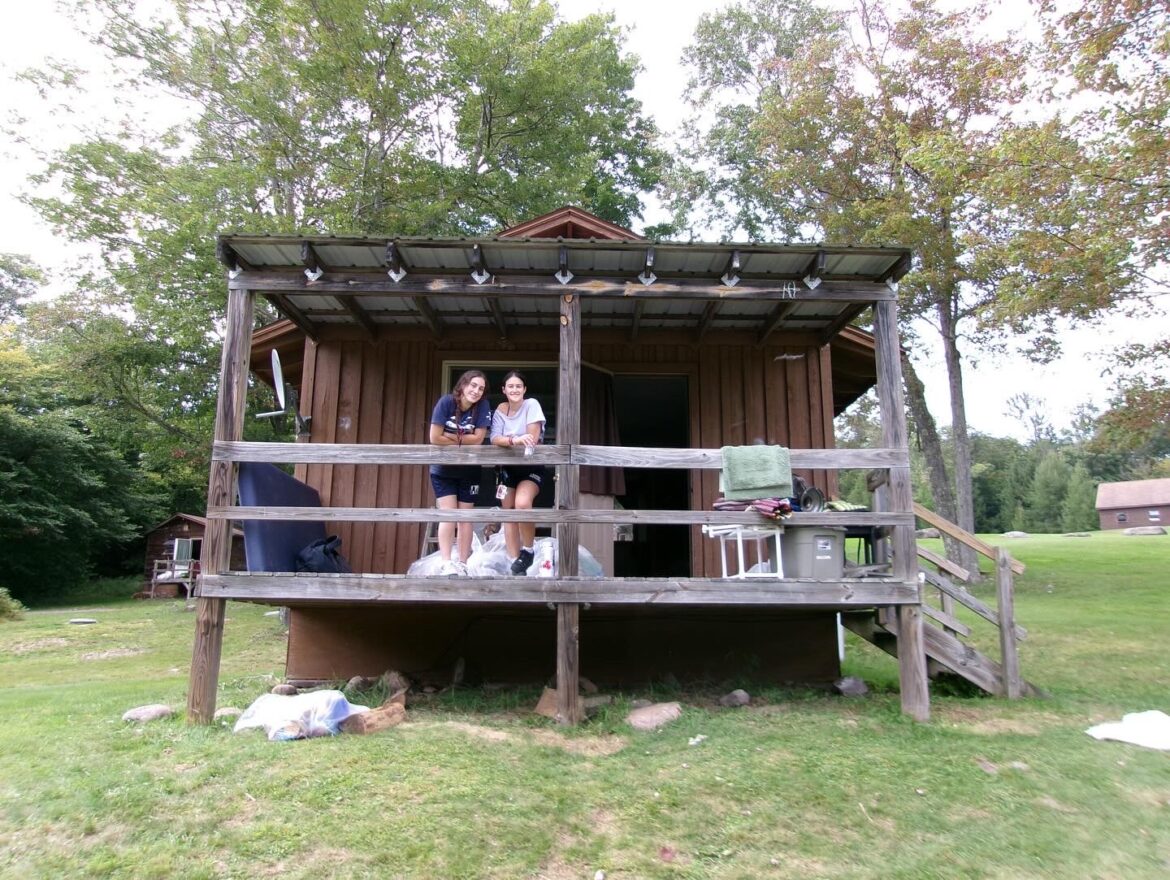
It was the summer of 2021, and my co-counselors and I were completely outnumbered. This was the first year post-pandemic that they were allowing campers to return to sleepaway camp after the lockdown. At our summer camp, we had the largest group, with 40 kids, and they were all eight to ten years old. I took a deep breath, hoping I could weather the storm of parent-free quarantine kids in the woods, but I had no idea what was ahead of me. It's no secret that COVID-19 affected children's lives, especially those at younger ages, who missed out on their formative years of building relationships and socializing. I was in a unique position to witness this as I was programming for children who had just gotten out of this 18-month lockdown. Many of these children had never left their parents ever before; they didn’t know how to survive without their iPads; and, they had no idea how to make friends. Now they were expected to live in the mountains of Upstate New York full-time, no phones, no wifi, no screens, and certainly no isolation from others.
According to the Centers for Disease Control and Prevention, from 2013 to 2023, every demographic of children reported an increase in experiencing persistent feelings of sadness or hopelessness in the past year.
In a book chapter called “Wild Teens: Youth Mental Health and the Pandemic, a psychiatrist attributed this increase in mental health issues to the pandemic, at least in part. She wrote that the lack of social interaction impacted development more than is given credit.
“In hindsight, there was no greater loss for them than that of safe places in our communities where they could gather and socialize,” she wrote in the book.
Now that things are “back to normal” in the wake of COVID-19, it is more important than ever to learn how child care professionals are managing these negative mental-health symptoms.
To learn more about the Madison-area youth mental health resources, I attended the “Youth Mental Health Resource Fair for Parents, Teens & Young Adults”, hosted by the UW Odyssey Project and Madison Commons. I was able to listen in on a solutions-based discussion on youth mental health, where I heard from some 15 organizations like Common Threads, which works with kids with autism, sensory issues, and mental health concerns, and also like FLYY, which works with youth to build resilience and provide creative outlets..
Following the discussion, I had the opportunity to meet with organizations afterward to learn more. I spoke to both RISE, a respite center for teens in the Dane County area, and GSAFE, an organization that provides LGBTQ+ youth programming at the middle and high school levels. I wanted to know how they have adjusted their programming to adapt to the increasing youth mental health crisis, especially in the wake of the pandemic that disrupted learning for kids for years.
A place to feel safe
As I took in what I was hearing about the stakes of this crisis, I again recalled that summer of 2021.
Very soon after the campers were dropped off, I realized that corralling a large group of these kids was going to be no easy feat. Everything that I learned in training before the pandemic had to be thrown out of the window, as behavior was just… different. Kids were getting in fights, having meltdowns, and trying to run away from the group daily. Their mental and emotional states were not consistent of healthy and happy kids. Development was completely stunted.
One of the main topics addressed in the resource fair group discussion was providing a safe space for youth to socialize and express their emotions in healthy ways. A representative with FLYY even stated that building a trusting relationship with children is the “foundation of any and all mental work.”
Sam Contreras, an Individual Skills Provider & Service Facilitator with FLYY, added that building a safe space is not only the easiest thing, but it is necessary working with young people today.
“Sometimes your work with somebody, even if they don’t want to show up, is just sitting quiet in a room for months and months, just proving to that person that you’re not there to judge them,” Contreras recounted at the event.
Following the group discussion, I asked Karen Fujikawa, the Director of Mental Health Programs at RISE, to learn more about their programs. RISE has been able to provide successful respite for small groups of “children ages 0-14, parent support, and crisis counseling 7 days a week,” according to RISE’s website. But they had to implement specific tactics to ensure these interactions continue to be positive experiences for the children, families, and caretakers.
Many of their patients have mental disabilities, their programs need to make youth with inherent social barriers feel more comfortable in an environment where they socialize.
Fujikawa highlighted how important it is for RISE to have a well-trained, knowledgeable, and passionate staff to take care of their members—emphasizing that even though they are constantly in need of staff, it is important to be selective in the process.
GSAFE’s Lane Hanson agreed with these sentiments in our discussions, and they shared a lot of first-hand knowledge of their programming for middle and high school students.
Their mission statement on their website states that GSAFE aims to “support the development of emerging GSAs at both the high school and middle school levels and support GSAs when they encounter discrimination and/or resistance from their school
community.”
Personalized Programming
Back at that summer camp in 2021, we were just a few days in, and it had become increasingly necessary to have one-on-one supervision of our campers. Before 2020, these kids would be expected to be fine following directions and being independent. But those age-old strategies of keeping them busy were failing left and right. And we counselors had exhausted all of our usual tricks, and we were wracking our brains to find anything that would help.
Fujikawa from RISE shared that RISE takes pride in their long intakes of children, meaning they try to get to know the kid before deciding how to proceed. RISE counselors do this to ensure that their small groups are compatible and that each member will be able to have their needs met. RISE has found that personalizing the programming and activities to each group is more imperative than ever to keeping young people engaged.
Kyianna Baker, a parent educator with Madison Metropolitan School District’s Play and Learn program, said she had also found success in letting the kids dictate the outcomes of situations, instead of forcing them into a mold.
For some children, “having that self-regulation, letting them feel those feelings in life, and know that they have a voice… is the most important part,” of connecting to a child, she added.
GSAFE’s Hanson added that many times, their work requires them to get on the students’ level to engage with them, to be vulnerable with them.
Hanson told me that their primary goal was to ensure students feel safe and comfortable during their school visits. GSAFE achieves this by hiring young adults who feel relatable to the students, can match their energy, and keep up with trends.
Hanson also highlighted a consistent effort to prioritize diversity in both representation and lived experiences. Students who see someone like themselves who have had similar mental health struggles can be incredibly motivating and can encourage students who need help to reach out.
In other words, GSAFE does not underestimate the power of having someone who “looks like you,” demonstrating healthy ways to seek mental health help.
This idea was reinforced during the group discussion by FLYY’s Contreras, who shared how demonstrating healthy coping mechanisms can be important in supporting youth mental health.
“We like to remind [caretakers] that modeling is a huge part of this,” Contreras said. When you use healthy coping mechanisms or reach out for help, “show those things to your kids, teach those things to your kids,” they continued.
Staying positive
Leaving the fair, I was brought back to my experience where I was an unequipped summer camp counselor, supporting children through mental health struggles for the first time. Using little tactics like this would have been so beneficial for me to learn about beforehand, and I think being open about conversations regarding youth mental health can be helpful for all childcare professionals.
However, I did feel disheartened that these conversations are still few and far between in the childcare space. Although the discussions we had were incredibly productive, it can be difficult to communicate these concepts to people— such as camp administrators—who are not open to listening or whose hands are tied because of scarce resources.
Still, I realized it would be pessimistic to underestimate how conversations like these can ripple into something much larger. Listening to these organizations that work at the nexus of youth and mental health, I saw what could become a blueprint for schools, after-school programs, daycare centers, and summer camps to strengthen group programming and better support all children.