by Sophia Capolupo
Local mental health specialists say we have entered a “self-care era,” a cultural shift popularized on social media.
While marketing trends and social media saturation have diluted the term “self-care,” experts acknowledge its clinical relevance in supporting health. Amid service limitations, reduced funding and a nationwide mental health crisis, self-advocacy and community support are working in tandem to fill the gaps in a fractured healthcare system.
Nearly 75% of Americans who qualify for a mental health diagnosis report receiving no treatment, according to the assessment. According to a 2026 assessment by the American Psychological Association (APA), untreated mental illness comes at the cost of a community’s prosperity through economic gaps between need and care. For example, recent cross-sectional research demonstrated how untreated mental illness in Indiana cost the state $4.2 billion in direct, indirect, and societal costs.
Recent policy proposals are pushing for the disinvestment in established services and access points, such as the 988 Suicide & Crisis Lifeline and public schools. However, bipartisan pushback has led to some extensions of federal funding.
Local mental health specialists like Beatriz Quintana are holding out hope for positive change.
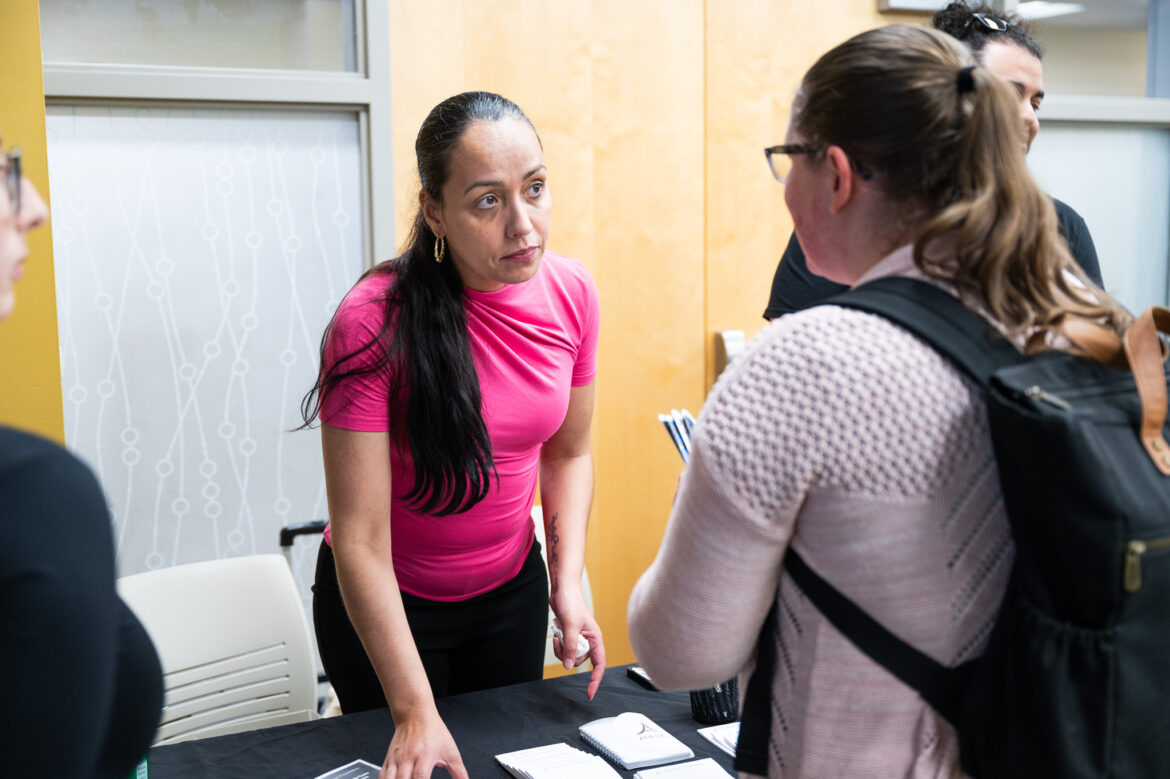
Quintana is a bilingual parent peer support specialist with the nonprofit Anesis Foundation for Mental Health in Dane County, which has long recognized the value of support from individuals with lived experience.
Anesis’ Supportive Services Director Vilitha Clay noted that the organization’s CEO and founder Myra McNair created “a program that centers hope, connection, advocacy, and authentic understanding for families navigating behavioral health challenges.”
Describing the current social climate as a turning point and antidote to the political one, she believes that increased promotion of self-care, empowerment and positivity online embodies a general movement towards self-advocacy and family wellness. This movement has contributed to an increased willingness of people of all ages to seek out mental health resources.
“We are in an era where change is going to be extremely impactful,” Quintana explained. “A lot of families are in that self-care era, that family era,” seeking to cultivate positivity and speak and breathe life into each other, she said.
“This movement is ideal right now” for people like her in community services, she added, “to continue to push forward because there is going to be change.”
Defining self-care
In a 2023 article on Psychology Today, Monica Vermani described how quality self-care is centered on four pillars: the food we eat, sleep quality, breathing and activity levels, and state of mind. Without properly tending to these sources of strength, individuals may rely on short-term fixes and indulge in temporary distractions. Vermani describes self-care as a sustainable commitment to oneself. Consistent self-care habits are directly linked to improved mental health and self-esteem, helping to build a foundation of resilience.
Vermani recommended five “self-care enhancements”: prioritize quality in your daily life; challenge negative mindsets; show yourself the same kindness you give to others; become comfortable with boundaries; and stay connected to things that bring you joy.
Self-care in the form of self-advocacy
Community wellness and self-care are not singular actions performed by the individual alone; they are the product of cohesive system-level efforts. According to a 2016 blog post written by Traci Noelle for the National Alliance on Mental Illness (NAMI), mental health wellness requires action at three distinct levels: personal, community and government.
On a personal level, individuals must be assertive about treatment options (in word and body language), be informed about them, and prioritize safety when disclosing health information. At the community level, suggested actions include building social supports to reduce isolation and maintaining a sustainable work-life balance. Government-related actions involve voting in local elections and informing representatives of the community’s needs to ensure policy reflects real conditions and needs.
Empowerment through local partnerships
Quintana emphasized that providers must remain resilient despite funding cuts and overwhelming demand. She encourages individuals to advocate for their mental health needs by utilizing local services, such as the Mt. Zion and Anesis behavioral health drop-in clinics.
These services were launched during the COVID-19 pandemic, when health disparities and racial injustices were becoming magnified. The partnership between Anesis Family Therapy and the Mt. Zion Baptist Church helps to provide more clinical services and free therapy to community members, increasing access to mental health care.
Quintana has personally seen the impact of taking the first step in self-advocacy by making an appointment to access services. She has witnessed significant transformations in families who simply take the first step of showing up.
“Everyone’s doing great work,” she said. “If we keep pushing forward, we’ll continue to make huge strides in our communities.”
The role of the individual in collective action
Peer support services can be highly beneficial to individuals and families experiencing hardship and mental health struggles. Felica Turner, a certified peer and grief specialist in Dane County, noted that the individual’s role is central to the healing process.
“The epitome of peer support is self-autonomy, self-determination and self-advocacy,” Turner said. “You have the things that you need for your life. I don’t get to tell you what that is and what you should do based on your experience.”
Turner explained that peer support specialists look to uplift people and remind them of what they can do for themselves. That small push creates a cascade effect of positive changes. This kind of support is crucial to the well-being of communities.
Furthermore, Turner said, communities must work to improve support for youth mental health to break a “seditious cycle” of problematic turnover: when youth experience poor mental health and grow into adults with long-term mental health issues.