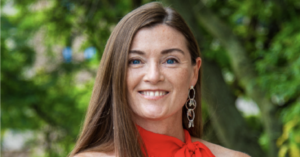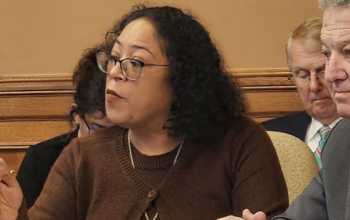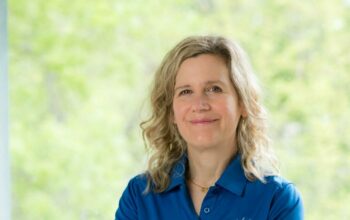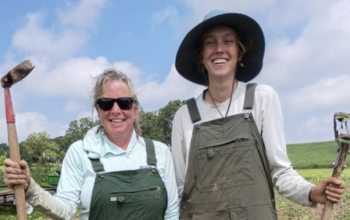
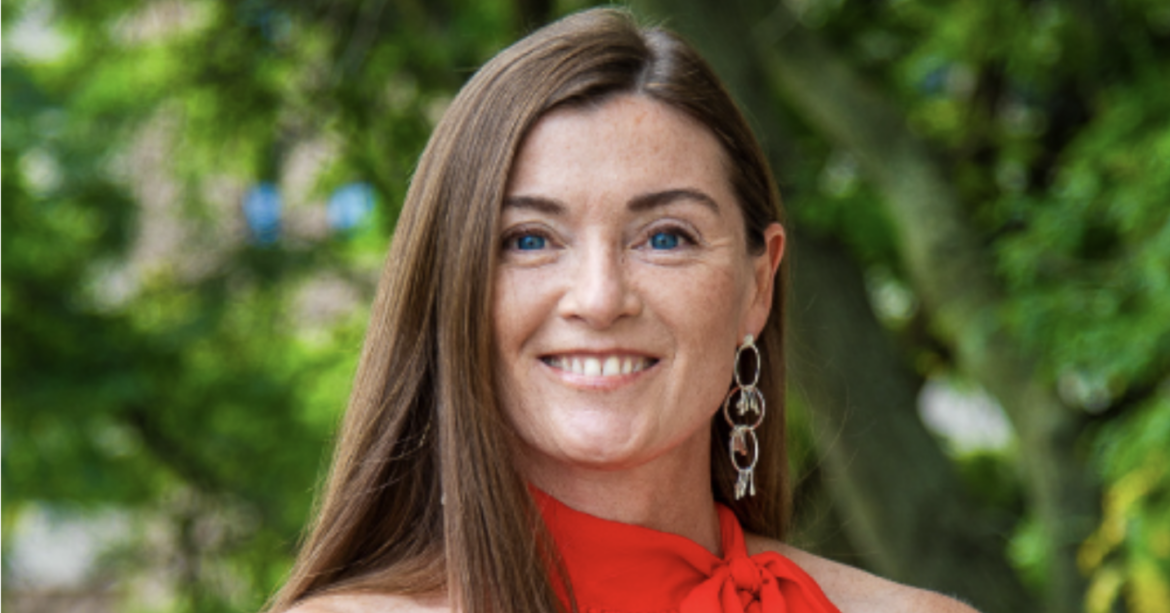
Sara McKinnon is a professor of rhetoric, politics, and culture in the Department of Communication Arts at UW–Madison whose work centers on immigration and refugee law, human rights and transnational rhetoric. A focus of her research is humanitarian immigration relief, including asylum and protections for trafficking victims, primarily those fleeing gender and sexuality-based persecution in Latin America. In addition, McKinnon serves as an expert witness in asylum cases and analyzes legal discourse in international courts, such as the Inter-American Court of Human Rights. She has published three books, "Gendered Asylum: Race and Violence in U.S. Law and Politics" (University of Illinois Press, 2016), "Text + Field: Innovations in Rhetorical Method" (Penn State University Press, 2016), and "Foreign Policy Rhetorics in the Global Era: Concepts and Case Studies"(Michigan State University Press, 2024), and published many articles on topics related to foreign policy, gender violence, asylum law and more. McKinnon co-chairs UW–Madison’s Human Rights Program, where she helps lead initiatives that bring attention to urgent global issues through public forums and campus programming.
What do you think is the biggest challenge our community faces?
I mean, I saw that question, and I was like, How do you even begin to answer that? I will answer it from my areas of expertise. As someone who works on immigration and refugee issues, and who works in Latin America a lot, right now we are facing a context of extreme restriction, extreme marginalization and scapegoating of immigrant communities. To me, that is always front and center on my mind, and I think it is in large part a communication problem. There has been a lot of discussion about the problems of U.S. immigration policy and laws, and as somebody who studies this stuff, I see it as kind of the reverse of that—that there are not enough viable pathways for people to have options to move and to seek residence somewhere. So I would like to see shifts in the messaging about immigration, ways that both move away from the scapegoating and discrimination of immigrant communities—that’s one thing— but also ways that open pathways for people to have viable options to move into secure settlement.
What do you wish people in our community understood better?
I think exactly what I was talking about, the legal pathways, the messaging. We hear the U.S. immigration system is broken. I do think that is kind of true, but I think the brokenness has been instituted; it’s been on purpose. So when we fire immigration judges and immigration officers and then do not replace them, that means that fewer and fewer applications are going to be reviewed. That sort of manufactures a crisis in some way, right? I think if we were to really imagine providing more services, revising the way in which we think about all of the options that people have to settlement, we would see a very different immigration landscape, and it would probably address a lot of the things that I have framed as problems.
What is one change you would make if you could that would make life better for people in the community?
It would be creating more legal pathways for people to be able to come to the United States, but also to stay in the United States. I know when you think of community, you’re probably thinking of the Madison community. I think that is true in Madison as well. More pathways, more viable pathways.
What in our community gives you hope?
When I talk with people, that really gives me hope. When I have conversations like this, it gives me hope. I mean, the hope really comes from interpersonal relationships. That’s a big thing. And then also seeing the way communities mobilize to help each other—that gives me a lot of hope.