
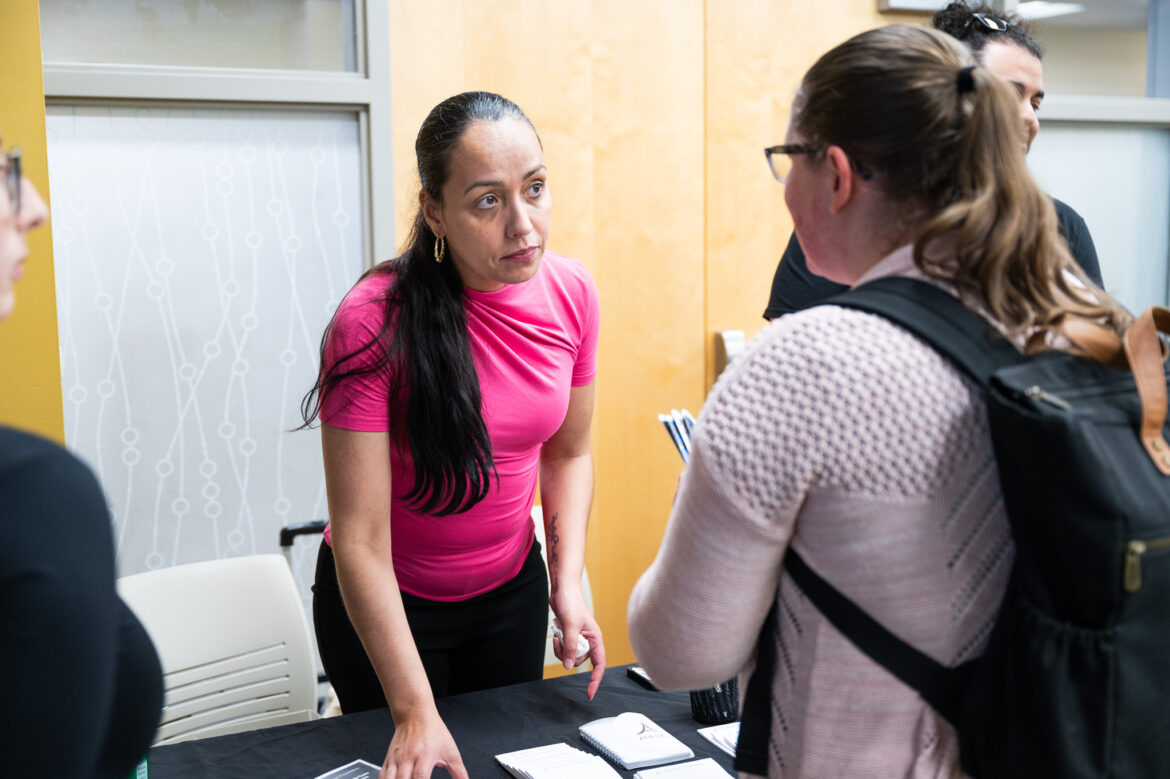
by Sophia Capolupo Local mental health specialists say we have entered a “self-care era,” a cultural shift popularized on social media. While marketing trends and
Category: Collaborative Solutions Stories
By Sue Robinson
Madison Commons Publisher
In Fall 2024, Madison Commons launched a new initiative to explore solutions to our persistent and noxious societal problems in an era of declining resources and support from government and other institutions. The idea was to invent a new kind of journalism, one in which reporters operate as caregivers and content highlights pathways forward. We nurture partnerships with local nonprofits working to ameliorate these problems in hyperlocal spaces. One consistent partner of ours is the UW Odyssey Project that transitions low-income adult students interested in seeking higher degrees. We had support from the Evjue Foundation, Morgridge Center for Public Service, Solutions Journalism Network, the Knapp Bequest Fund and Sharon Stark in addition, of course, the School of Journalism & Mass Communication.
In this article you can read about our projects on housing insecurity and
youth mental health, with links to the coverage. Future teams might expand these topics to issues like addiction, health care costs or poverty. In an era of diminishing government support and institutional safety nets, what programs exist and what ones could be created? How might we journalists advance the conversations and point toward solutions for Madison communities? We see our role as connecting people with resources and creating a network of experts and policymakers and organizations at the forefront of this issue through a combination of content production and events. In this work all of the students and community members we worked with got paid either their stipend as an intern or as a freelancer (usually $50). You can read more about what we mean by “collaborative storytelling” here.
2025-2026 Youth Mental Health
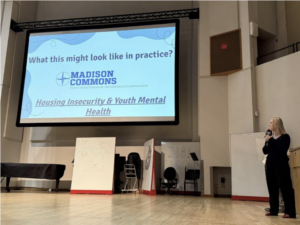
Madison Commons applied for and received some funding from the Solutions Journalism Network’s Student Media Challenge to explore youth mental health, particularly the intersection of housing insecurity with youth mental health (thinking about youth as 0-25). We know that 21% of kids under the age of 18 have been diagnosed with some kind of mental health illness with some 60% of kids in college meeting the criteria for at least one diagnosis. And, one 2022 study in Journal of Community Health found that 44% of college students responding to a survey “were housing insecure in the past year” and that “basic needs insecurities significantly increased odds of anxiety.” We were also thinking about K-12 kids whose families struggle with consistent, safe shelter and who often fall through the cracks in terms of their mental health
needs. For example, kids who have accommodations but have to move every six months because of housing insecurity receive spotty treatment and learning.
The 2025-2026 project involved about 30 students:
- Team HAM Reporters Laine Casey, Amari Mbongwo, Mackenzie Belletini (Fall only), Amelia Geis (Fall only), and Katie Mastorides (Fall only)
- Team HAM Multimedia Reporters Sophia Capolupo, Madison Commons’ Intern Matt Gatland and Lucas Snow (Fall only)
- Project Editor Sara Babani
- Madison Commons Legal Studies Intern Madeline Green
- Madison Commons Managing Editor Intern Alexandra Malatesta
- The 20-person, Community-Based Learning Course ENG201/J475 Collaborative Storytelling Skills of SJMC and UW Odyssey Project also produced content (Spring only): Ngina Ali, Angelica Valencia, Kyianna Baker, Valvree Mosley, Dan Thomas, Victor Rojas, Marisol Gonzalez, Adrianne Farrow, Dajia Pigram, Tina Martinez, Brandi Whitlock, Alex Schmitz, Madeline Rodriguez, Paige Bleck, Hanna Cutler, Cleo Whitney, Paige Valley (Amari, Alexandra and Maddie Green were also in the class as well as on the Team HAM along with Carlos Dávalos and Sue Robinson)
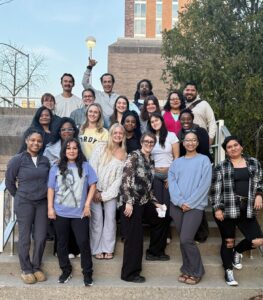
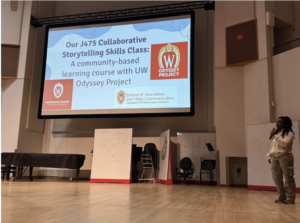
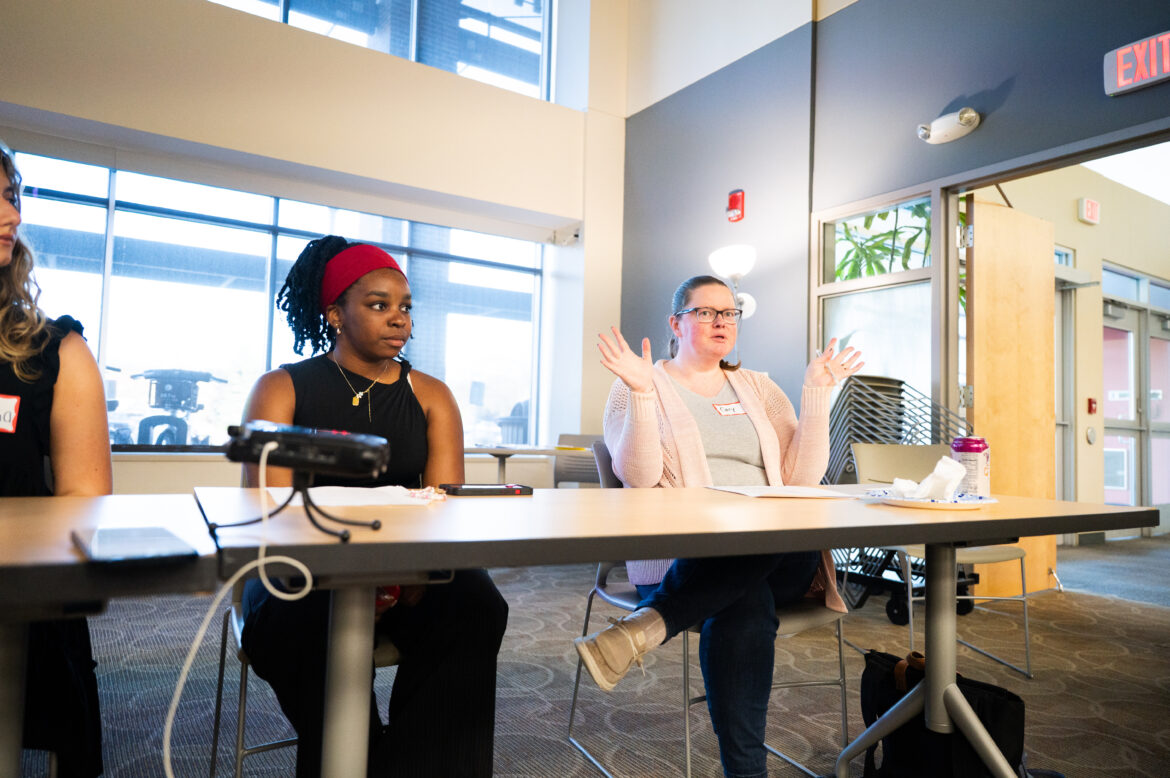
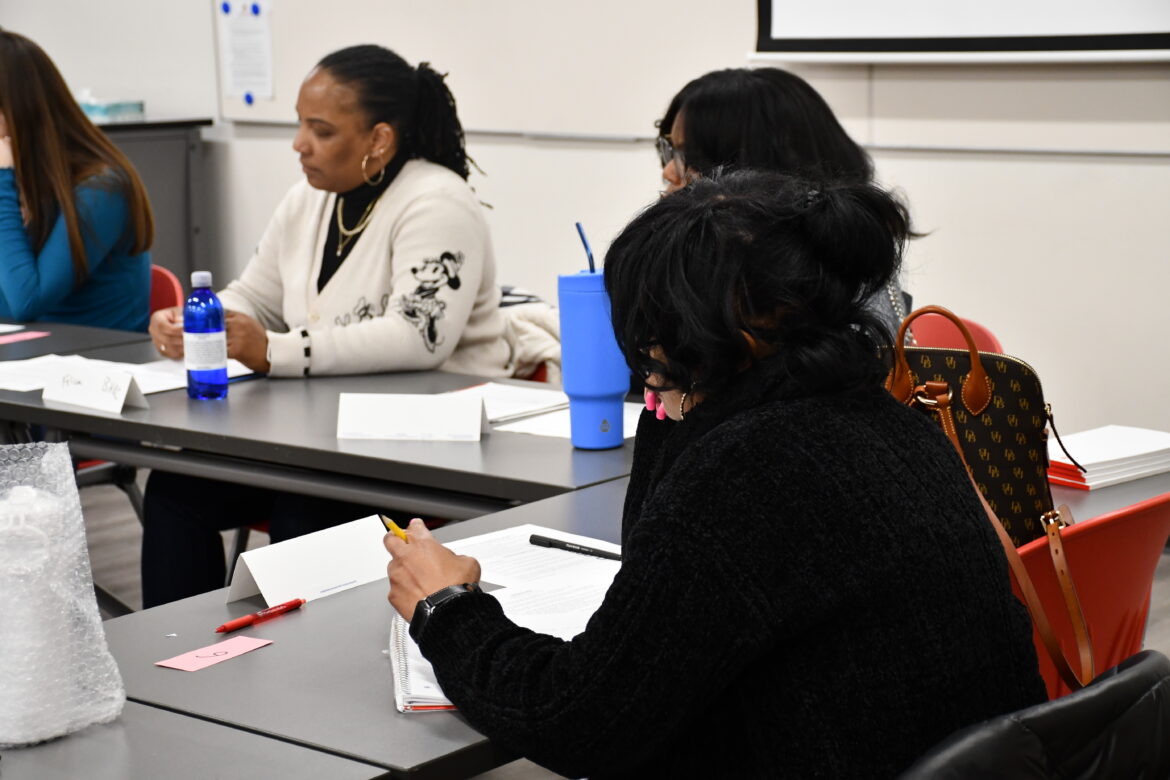
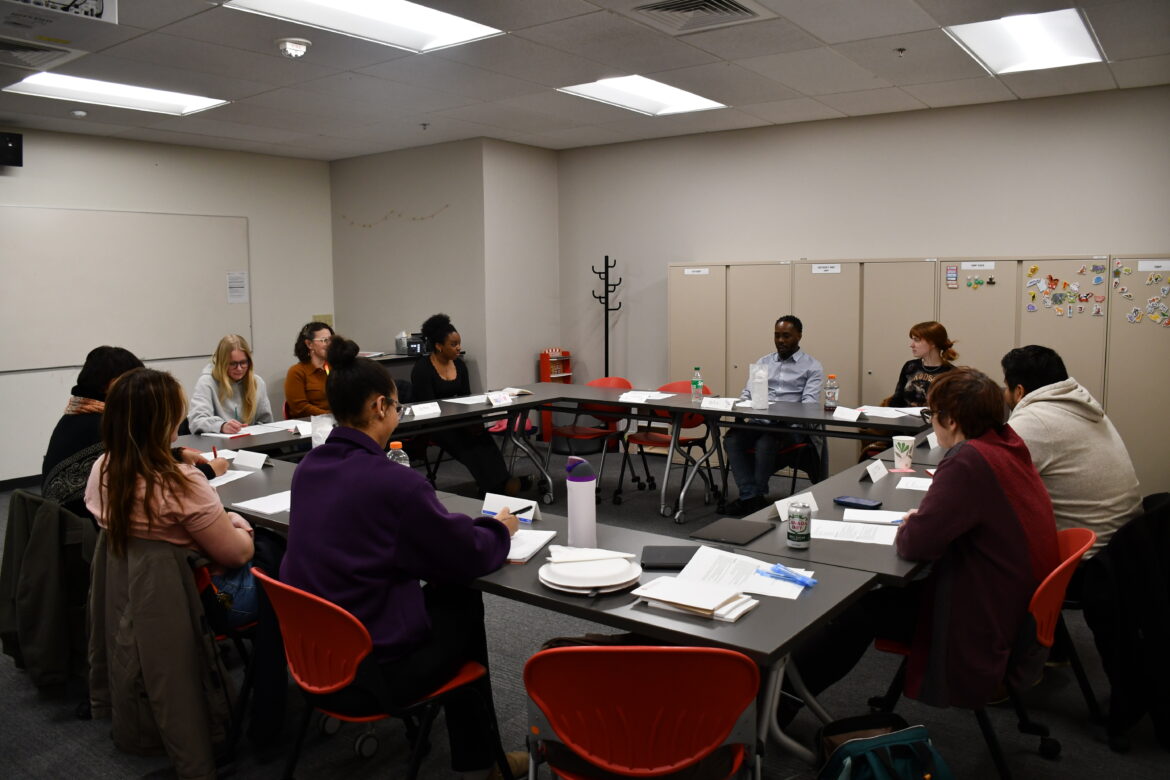
The ENG201/J475 Collaborative Storytelling Skills Class of both UW Odyssey Project students and the School of Journalism & Mass Communication in March 2026. Photo Credit: Some guy using Sue Robinson’s phone
Madison Commons Publisher Sue Robinson supervised the team with support from MC Editor Stacy Forster and MC Managing Editor Louisa Kamps; in Spring 2026, Carlos Dávalos, a PhD student and working radio journalist, joined the team as a supervisor and editor as well. In addition, Odyssey’s staff supported both the events and the class through everything from room space to childcare to dinners.
For 2025-2026, we collaborated with the following nonprofits: UWOdyssey Project, The RoadHome, Movin’ Out, Bayview Community Foundation, Root2Rise, and the podcast Housing Last while asking the following to engage with us in events and/or content: Briarpatch, RISE, Anesis, FLYY, Common Threads Family Resource Center, Our Generation, Behavioral Health Resource Center of Dane County, Dreams Lab/Sleephealth Ambassadors, Parent to Parent, Play to Learn, GSafe, and the UW Law School. We ran quotes by the sources in our journalism stories and paid some of the community members either to join our events or share their stories with us.
2024-2025 Housing Insecurity
We began our “Community Collaborations” site with a focus on housing insecurity, reporting and publishing resources, stories, a documentary, personal essays and other content during the academic year 2024-2025. Madison’s housing, both for renting and buying, is considered fairly expensive compared to other U.S. cities. Average renting costs are about $1,469 a month for 712 square feet, putting the city at position 31 out of 100 most expensive places to rent in the United States, according to a Zumper National Rent Report. This is compared to $1,623 a month as the national average for renting apartments the same size. Buying a house is out of a lot of people’s reach in Madison, with the median home price hovering around $407,621 and increasing dramatically – about 5.1% in 2024 – each year, according to Zillow statistics. As one comparison, the average house cost about $250,000 in 2017. For people living paycheck to paycheck, these numbers become stark realities each month as they are forced to make choices: broccoli or meat? Eating three meals a day or two? Pay the water bill or the rent? We wanted to dive deep into these dilemmas and find the programs and opportunities to ameliorate these choices.
The SJMC seniors Maeghan Chase, who served as our managing editorial intern, and Noah Maze, who served as our legal studies intern, led this effort to investigate housing insecurity — especially its solutions. They came up with the topic and worked throughout the year, not only on developing resource lists and helping to find funding, but also helping to form a reporting team for the Spring 2025 semester and hosting two events. Our team included: Lily Spanbauer, Maneeya Leung, Alyssa Lutker, Sreejita Patra, Kiesen Williams and Maggie Cleary. This is all led by Madison Commons Publisher Sue Robinson with support from MC Editor Stacy Forster and MC Managing Editor Louisa Kamps. 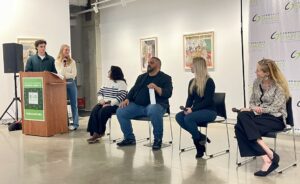
We collaborated with five organizations: the UW Odyssey Project, OWN IT: Building Black Wealth, FLYY, the Housing Last podcast by Matvei Mozhaev and the City of Madison’s Community Development Authority Housing Operations Division. In this collection you will find a list of resources for people struggling with housing costs or tenant rights, wrongful eviction and other concerns, stories and photos of our two April 2025 events, profiles of people working on the front lines in various organizations, vignettes of people struggling with housing and finding solutions, podcasts of unhoused people and other content.
The following parameters apply for each category of content:
- Journalism stories are independent Madison Commons content that a reporter did without co-creation with our partners, except to run the quotes and information by the sources to ensure accuracy. Many of these — though not all — are considered “solutions journalism” because they research a response to the problem, learn insights about the response, provide evidence of whether it works, and offer limitations that challenge implementation.
- Collaborative stories are content co-created with one or more community partners where all authors get a say over what the content looks like and some sources in the stories were paid because they educated our reporter or us in some way and we wanted to compensate for that labor.
- Personal essays are either opinion pieces, memoir stories or something like poetry. They are not balanced or neutral stories but rather contain subjectivity and offer lived experiences as evidence. It is important to note that these opinions are from the authors and do not represent the views of Madison Commons or the School of Journalism & Mass Communication.
- Resource Lists are just bulleted organizations or programs that can provide responses to our societal problems.
 Storytelling Content
- What is Collaborative Storytelling? (Sue Robinson)
- Collaborative Storytelling: How we do community-based, solutions focused work in Madison (Sue Robinson)
Youth Mental Health (2025-2026)
- Journalism Story (Solutions): How Operation Fresh Start provides a new future for young adults in Dane County (Kat Hans, Nov. 25, 2025)
- Journalism Story: Redrawing the path: YAAS Madison’s model for youth mental health and justice support (Maddie Green, Dec. 16, 2026)
- Journalism Story (Solutions Video): Co-housing offers an alternative to high rents and solitary living (Matt Gatland, Dec. 18, 2025)
- Journalism Story: Can AI therapy help when BIPOC therapists are in short supply? (Laine Casey, Feb. 25, 2026)
- Journalism Story: An inside look at the restorative justice process in Dane County and statewide (Maddie Green, April 10, 2026)
- Journalism Story: Behavioral health therapist layoffs at SSM Health add to concerns about mental health care shortages in Madison and across Wisconsin (Kat Hans, May 7, 2026)
- Journalism Story: Why representation matters in youth mental health services (Maddie Green, May 20, 2026)
- Journalism Story: Escaping ‘survival mode’: Youth mental health support (Sophia Capolupo, May 20, 2026)
- Journalism Story: Mental health legal rights for youth in Wisconsin (Maddie Green, May 20. 2026)
- Journalism Story: Bridging Worlds: Art as a Shared Language (Xiaolei Xu, May 20, 2026)
- Journalism Story: Youth Mental Health Providers Make the Case for “Wraparound Care” (Laine Casey, May 20, 2026)
- Journalism Story: Essence Supports Black College Students as a Youth Mental Health Response (Amari Mbongwo, May 21, 2026)
- Journalism Story: How adaptive sports are transforming youth mental health (Sadee Johnson, May 21, 2026)
- Journalism Story: How Madison is Rethinking Youth Mental Health Through Communication (Cleo Whitney, May 22, 2026)
- Journalism Story: Becoming Advocates: How parents of children with disabilities step up to give their children a voice (Bethany Stacey, May 22, 2026)
- Journalism Story: Organizations Rely on Each Other in Youth Mental Health Space (Amari Mbongwo, May 22, 2025)
- Journalism Story (Podcast): Housing Last Podcast: Thinking about mental health as an unhoused 18 year old (audio) (Amelia Geis; actual episode will air on May 31, 2026)
- Journalism Story (Podcast): Housing Last Podcast: Mental health crises for unhoused folks (audio) (Amelia Geis; actual episode will air on May 31, 2026)
- Journalism Story: A Parent’s Guide to Having a Thriving Kid Who Also Happens to Be On the Spectrum (Bethany Stacey, May 23, 2026)
- Resource List: Dane County youth mental health resources (Maddie Green, May 20, 2026)
- Personal Essay: It doesn’t always take a village: The importance of Parents in Youth Mental Health (Paige Bleck, May 20, 2026)
- Personal Essay: Post-COVID Summer Camps and Supporting Our Youth in Changing Times (Madeline Rodriguez, May 21, 2026)
- Personal Essay: Listen before you label: What parents misunderstand about youth mental health (Hanna Cutler, May 22 2026)
- Personal Essay: Youth Mental Health: Not the Same for Everyone (Val Mosley, May 22, 2026)
- Personal Essay: Postpartum Depression Couldn’t Keep Me (Brandi Whitlock, May 22, 2026)
- Personal Essay: Breaking the Silence: A Mother’s Journey (Adrianne Farrow, May 22, 2026)
- Personal Essay: It All Starts At Home: How parents are the first solution to youth mental health (Dan Thomas)
- Personal Essay: Mental Health for Bilingual and Bicultural Families: Our story (Marisol Gonzalez, May 22, 2026)
- Personal Essay: Taking youth mental health seriously in an oversaturated political environment (Alexandra Malatesta, May 22, 2026)
- Personal Essay: Why immigrants, veteran families have more risk of having mental health problems (Coming)
- Personal Essay: Built through pressure: My brand, Chinadoll Cosmetics (Tina Marie Martinez, May 23, 2026)
- Collaborative Story: Root 2 Rise Podcast Seeds of Leadership (video) (Staff, Dec. 17, 2025)
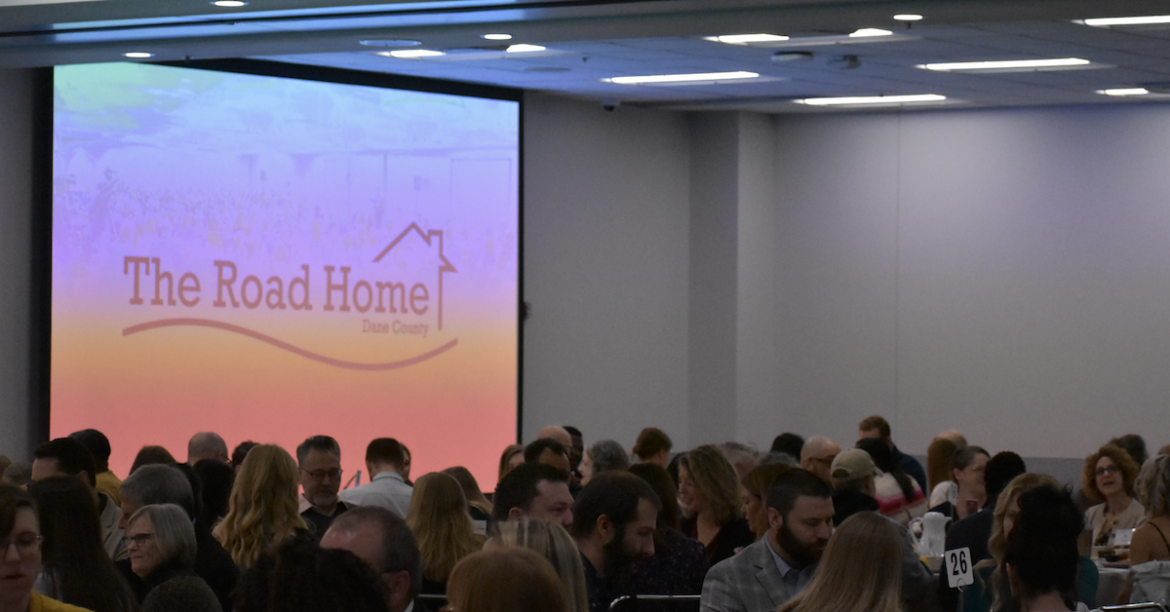
- Collaborative Story: Building futures, one family at a time: The Road Home honors stories of strength at their annual breakfast fundraiser (Amari Mbongwo, Feb. 23, 2026)
- Collaborative Story: Addressing housing insecurity through a holistic care model (Sophia Capolupo, Feb. 23, 2026)
- Collaborative Solutions Story: The self-care era: Addressing mental health through advocacy and community services (Sophia Capolupo, May 20, 2026)
- Collaborative Story: Movin’ Out: Celebrating 30 Years (Paige Bleck, Alexandra Malatesta, Valvree Mosley, and Dan Thomas, May, 22, 2026)
- Collaborative Story: Movin’ Out Finds Those with Disabilities Homes to Reach Mountain Tops (Alex Schmitz, May 22, 2026)
Housing Insecurity
-
- Journalism Story: Understanding the struggle with housing: What we can learn from urban renewal (Lily Spanbauer, May 14, 2025)
- Journalism Story: Wisconsin lawmakers take aim at AI pricing in rental housing, joining national antitrust fight (Noah Maze, May 17, 2025)
- Resource: Housing organizations and programs (Noah Maze, Spring 2025)
- Resource: Dane County housing consortium as a resource (Alyssa Lutker, Spring 2025)
- Collaborative Story: OWN IT: Building Black Wealth profile (Maneeya Leung, Spring 2025)
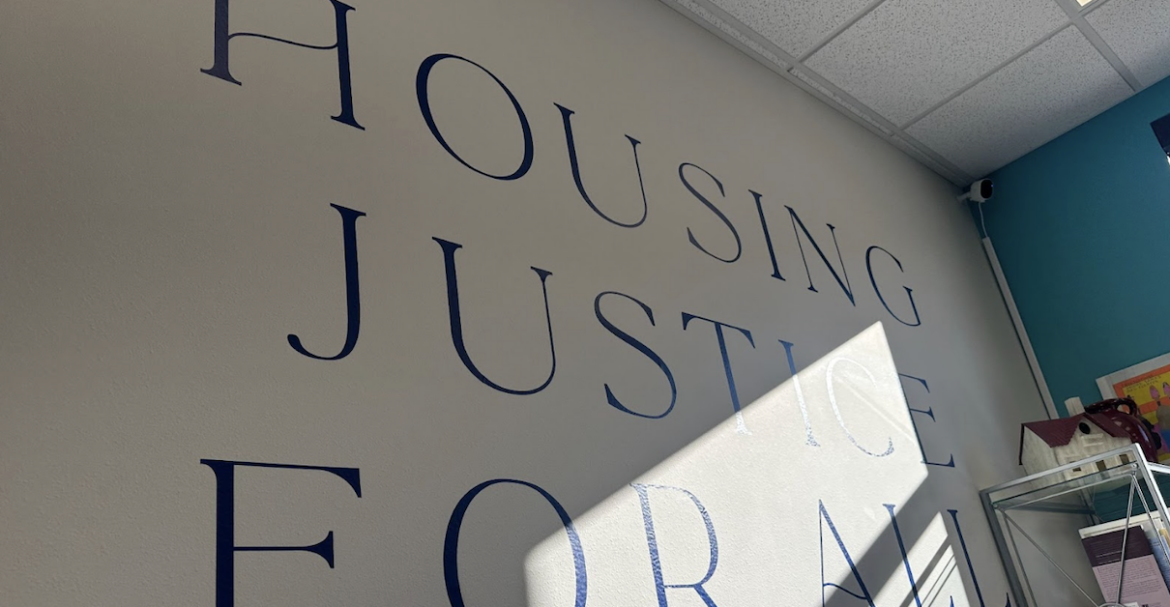
- Resource: Ten Tips for for tenants from Wisconsin lawyers (Lily Spanbauer with photos by Jonás Tijerino, Spring 2025)
- Collaborative Story: Exploring a “Family Scholar House” for Madison (Alyssa Lutker, Spring 2025)
- Collaborative Story: Explore the Scholar House concept (Kentucky and Indiana) (Sreejita Patra and Kiesen Williams, Spring 2025)
- Collaborative Story: The UW Odyssey Project residential learning program (Sreejita Patra, Spring 2025)
- Collaborative Story: Meet Team Housing partner Brian Bedford (Sreejita Patra, Spring 2025)
** HUGE thank yous go to our partners and funders who supported all of this work over the last two years: UW Odyssey Project, Evjue Foundation, Morgridge Center for Public Service, Solutions Journalism Network, the Knapp Bequest Fund, Sharon Stark and the UW-Madison School of Journalism & Mass Communication.
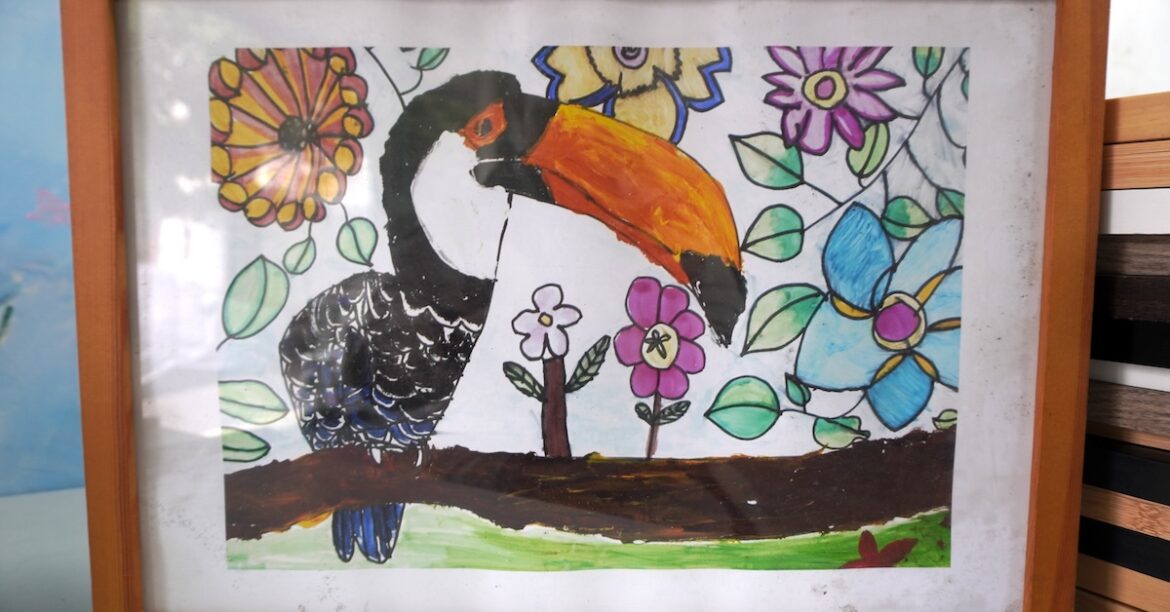
Bridging worlds: Art as a shared language
By Xiaolei Xu The webpage for the text story, with pictures: https://autismandarttherapy.wordpress.com/ A child squeezed paint from a tube for the first time, in an
Resource List: Dane County youth mental health resources
By Madeline Green On Thursday, April 16th, Madison Commons, in collaboration with UW Odyssey Project, held a youth mental health resource fair. Present at the
Mental health legal rights for youth in Wisconsin
By Maddie Green A teenager knows something isn’t right. They want to talk to a therapist but don’t want their parents to know everything they
Escaping ‘survival mode’: Youth mental health support
By Sophia Capolupo Extensive research shows that economic hardship is closely linked to worsened mental health and long-term health outcomes. A 2022 study published in
Why representation matters in youth mental health services
By Madeline Green After months of building up the courage, a teenager sits across from a therapist, prepared to unpack years of buried experiences, past
What is Collaborative Storytelling?
Let’s explain what we mean by storytelling collaboration. This is a more involved, less “objective” kind of journalism that embeds students into organizations to work
Building futures, one family at a time: The Road Home honors stories of strength at their annual breakfast fundraiser (Collaborative Story)
“How can a Motel 6 feel more like a home than stone and bricks?” UW–Madison student artist and Madison 2024 Youth Poet Laureate Justin Festege-Russell

Collaborative Story: Addressing housing insecurity through a holistic care model
By Sophia Capolupo The United States continues to face a nationwide affordability crisis marked by extraordinary rates of housing insecurity. Communities report difficulty adequately supporting
The Tenant Resource Center fights housing instability and provides resources to renter households facing eviction
According to data collected by the Tenant Resource Center, a Madison organization that supplies eviction information, support and legal representation to households and individuals, 2,353
Load More